
How to Remove Bird Droppings from Windows Without Scratching the Glass
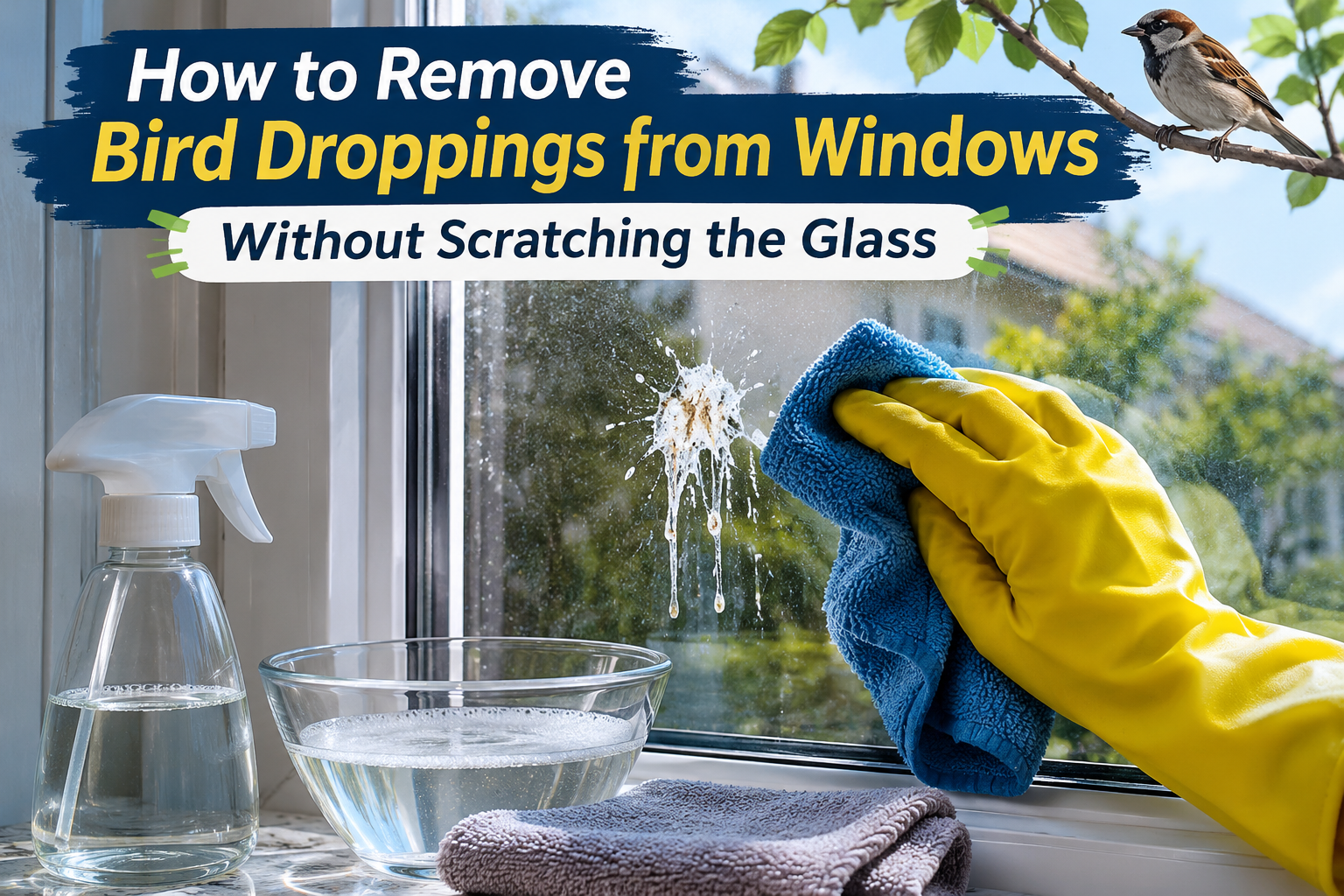
Bird droppings on windows are more than an eyesore. Once they've dried, they can cling stubbornly to the glass, leaving unsightly marks that are difficult to shift. The temptation is to grab a sponge and start scrubbing. Unfortunately, that's exactly how you risk scratching your windows.
The good news? You don't need harsh chemicals, expensive equipment or excessive elbow grease to get your glass sparkling again. With a little patience and the right cleaning technique, even stubborn bird poop can be removed safely.
Here's what you need to know before getting started:
-
Soften before wiping: Soak dried bird droppings with warm water for 10–15 minutes, rewetting as necessary, rather than attempting to scrape them off.
-
Use gentle cleaning products: A few drops of washing-up liquid mixed with warm water are usually enough to loosen bird mess without damaging ordinary window glass.
-
Choose non-abrasive materials: A clean microfibre cloth or soft sponge helps protect the glass from scratches.
-
Never scrub dried deposits: Hardened droppings can trap grit and other abrasive particles, making aggressive rubbing particularly risky.
-
Be cautious with household remedies: White vinegar and WD-40 are sometimes suggested for stubborn stains, but they aren't suitable for every type of glass, coating or window component.
-
Rinse thoroughly: Remove loosened dirt and cleaning solution with clean water to prevent streaks and residue.
-
Know when to call a professional: Large deposits, difficult-to-reach windows and delicate glass coatings may require specialist attention.
The golden rule is simple: soften the mess, lift it gently, then rinse the glass clean.
Below, we'll explain why bird droppings are so difficult to remove, which cleaning supplies are safest and how to tackle the problem step by step without putting your windows at risk.
Why Are Bird Droppings So Difficult to Remove from Glass?
Ever noticed how a fresh bird dropping can be wiped away relatively easily, yet the same mess becomes remarkably stubborn after a day or two?
There's a reason for that.
Bird droppings contain a mixture of waste materials, including uric acid compounds, mineral salts and organic matter. When they land on a window, the moisture gradually evaporates, leaving behind a concentrated deposit that sticks firmly to the surface.
Add sunshine, wind and a little airborne dust, and you've got a surprisingly difficult cleaning problem.
1. Dried Bird Poop Forms a Hard, Crusty Deposit
Fresh bird poop generally contains enough moisture to make removal straightforward. Once exposed to the elements, however, it begins to dry and harden.
On a warm day, particularly when the glass receives direct sunlight, this process can happen quickly.
The resulting crust may cling tightly to the window, especially around the edges of the deposit.
Attempting to remove hardened bird droppings with a dry cloth often achieves very little. Worse still, the pressure needed to shift them can drag trapped particles across the glass.
That's why pre-soaking bird droppings is one of the most important steps in scratch-free window cleaning.
Water gradually rehydrates the deposit, helping it loosen so it can be lifted away with much less force.
2. Bird Droppings Can Trap Abrasive Dirt and Grit
Here's something many homeowners overlook.
The bird mess itself isn't necessarily what scratches your windows. The real danger often comes from the tiny particles trapped within or underneath it.
These may include:
-
Windblown dust and grit
-
Sand and fine mineral particles
-
Dirt already sitting on the glass
-
Debris collected as the droppings dry
When you scrub a dried deposit, these particles can be dragged across the window surface.
Depending on their hardness and the type of glass or coating, they may leave fine scratches that become particularly noticeable in direct sunlight.
This is why a clean, soft cloth matters just as much as the cleaning solution.
Window cleaning tip: Never use the same cloth to scrub away hardened bird mess and polish the surrounding glass. Remove the contamination first, then use a fresh, clean microfibre cloth for the finishing touches.
3. Sun-Baked Bird Droppings Are Particularly Stubborn
Windows exposed to prolonged sunlight can be especially challenging to clean.
Heat accelerates moisture loss, turning fresh bird droppings into dry, firmly attached deposits. Repeated wetting and drying can make the residue increasingly difficult to remove.
South-facing windows, conservatories, skylights and large patio doors may be particularly susceptible during warmer weather.
The longer bird mess remains on the glass, the more effort may be needed to remove it safely.
However, there's an important distinction between stubborn residue and permanent glass damage.
A cloudy mark left behind after cleaning isn't automatically a scratch or evidence of etching. It could simply be residual contamination, a mineral deposit or a mark on a surface coating.
If a stain remains after gentle cleaning, avoid reaching immediately for stronger chemicals or abrasive tools.
For particularly troublesome windows, professional cleaning may be the safer option. At Pivotal Window Cleaning, you can explore window cleaning services across the UK and find help with maintaining clean, clear glass.
What You'll Need to Remove Bird Droppings Safely
Before tackling bird poop on your windows, gather the right equipment.
You probably already have most of it at home.
The aim isn't to find the strongest possible cleaning product. It's to use materials that will loosen the contamination without damaging the glass, its coatings or the surrounding window frames.
Essential Window Cleaning Supplies
| Cleaning item | Why you'll need it |
|---|---|
| Warm water | Helps soften and rehydrate dried bird droppings |
| Washing-up liquid | Loosens dirt and organic residue when diluted |
| Clean microfibre cloths | Gently lift softened deposits without unnecessary abrasion |
| Soft, non-scratch sponge | Useful for carefully cleaning larger affected areas |
| Spray bottle | Allows controlled application of cleaning solution |
| Clean bucket | Holds fresh water and diluted washing-up liquid |
| Window squeegee | Removes water from suitable glass surfaces for a streak-free finish |
| Protective gloves | Reduce direct contact with bird waste and cleaning products |
| Kitchen roll or disposable cloths | Help collect loosened contamination for disposal |
For most ordinary, uncoated household windows, warm water, a small amount of washing-up liquid and a clean microfibre cloth are a sensible starting point.
There's usually no need to reach for specialist chemicals.
The Best Cleaning Solution for Bird Droppings on Windows
A simple homemade window cleaning solution can be surprisingly effective.
You'll need:
-
500 ml of warm water
-
2–3 drops of mild washing-up liquid
-
A clean spray bottle or small bucket
Mix the ingredients gently until the washing-up liquid is dispersed.
Avoid adding too much detergent. Excess soap can leave a film on the glass, making it harder to achieve a streak-free finish.
The water should be comfortably warm, not boiling hot.
Sudden temperature changes can place unnecessary stress on glass, particularly if the window is already very cold or damaged.
Why does this solution work?
Warm water helps rehydrate the hardened deposit, while the diluted washing-up liquid assists in loosening greasy and organic contamination.
Together, they allow you to clean the affected area using gentle pressure rather than aggressive scrubbing.
For windows with specialist coatings, applied films or unusual glazing treatments, always follow the manufacturer's cleaning instructions before using any solution.
Should You Use White Vinegar?
White vinegar is frequently recommended as a natural window cleaning remedy.
Its mild acidity can help tackle certain mineral deposits and water marks, which makes it useful for some general glass-cleaning tasks.
However, it's important not to confuse removing mineral deposits with removing bird droppings.
Vinegar isn't necessarily more effective than warm soapy water at loosening dried organic matter.
It may also be unsuitable for some coated surfaces, window films, seals or surrounding materials.
If you're considering using vinegar:
-
Check the window manufacturer's cleaning recommendations.
-
Avoid applying it to unknown or delicate coatings.
-
Never mix it with bleach or other cleaning chemicals.
-
Rinse the treated area thoroughly with clean water.
For routine bird dropping removal, start with warm soapy water rather than vinegar.
It's simple, inexpensive and generally sufficient when combined with proper soaking.
Why a Microfibre Cloth Is Better Than a Rough Scrubbing Pad
Not all cleaning cloths are created equal.
A soft, clean microfibre cloth is particularly useful for window cleaning because its fine fibres can pick up loosened dirt without requiring excessive pressure.
However, even microfibre can cause problems if it's contaminated with grit.
Always inspect your cloth before using it and replace it if you notice embedded particles.
Avoid using:
-
Wire wool or steel wool
-
Rough kitchen scouring pads
-
Dirty sponges previously used on abrasive surfaces
-
Stiff-bristled brushes
-
Metal scrapers or unprotected razor blades
Although some professional window cleaners use specialist scraping or scrubbing equipment in carefully controlled circumstances, these techniques aren't universally safe.
Certain types of toughened glass, coated glazing and window films can be particularly vulnerable to inappropriate cleaning methods.
When in doubt, choose the gentlest approach.
Step-by-Step: How to Clean Bird Droppings Off Windows Without Scratches
Now for the practical part.
Whether you're dealing with a small pigeon dropping on a kitchen window or a stubborn patch of bird mess on your patio doors, the basic method is the same.
Don't try to force the deposit off the glass. Give it time to soften first.
Step 1: Check the Glass and Prepare the Area
Before applying any cleaning solution, take a moment to inspect the window.
Look for obvious cracks, damaged seals, specialist coatings or existing scratches.
If the glass has a protective film or external coating, check the manufacturer's guidance before proceeding.
Next, make sure you can reach the affected area safely.
For ground-floor windows, this is usually straightforward. If the droppings are on an upstairs window, skylight or difficult-to-access conservatory roof, avoid leaning out of windows or using an unstable ladder.
Professional window cleaners often use water-fed pole systems to reach elevated glazing safely from ground level, where conditions allow.
For difficult-to-reach windows, you can request a window cleaning quote rather than taking unnecessary risks.
Put on protective gloves before handling the contamination.
Bird droppings can contain microorganisms, so avoid brushing or scraping them while dry, which may disturb particles and create airborne dust.
If there's loose grit around the deposit, gently rinse it away with clean water before touching the glass with a cloth.
Step 2: Soften the Bird Droppings with Warm Water
This is arguably the most important stage of the entire process.
Fill your spray bottle with warm water or the mild washing-up liquid solution prepared earlier.
Spray the affected area generously, ensuring the dried bird poop is thoroughly dampened.
Then leave it alone.
Allow approximately 10–15 minutes for the deposit to soften, checking periodically and reapplying water if it begins to dry.
This is a practical starting point rather than a fixed rule. Fresh droppings may loosen much sooner, while thick, sun-baked deposits may need repeated soaking.
If you're cleaning a vertical window and the water keeps running off, hold a clean, damp microfibre cloth gently against the affected area for a few minutes.
Don't rub or apply heavy pressure.
The purpose is simply to keep the contamination moist long enough for it to soften.
Remember: If the bird droppings still feel hard after soaking, don't increase the scrubbing pressure. Apply more warm water and allow additional time.
Patience at this stage can make the difference between safely removing the mess and accidentally scratching your glass.
Step 3: Gently Lift Away the Softened Bird Mess
Once the droppings have softened, take a fresh, damp microfibre cloth or clean, non-scratch sponge.
Working from the outer edge of the deposit towards the centre, gently lift away the loosened material.
Use light pressure and avoid dragging large particles across the surrounding glass.
Where possible, collect the softened residue in the cloth rather than spreading it over the window.
If part of the deposit remains firmly attached, stop and soak that section again.
Never force stubborn bird poop off the glass with your fingernail, a scraper or the rough side of a sponge.
As the cloth becomes dirty, fold it to expose a clean section or replace it entirely.
This prevents grit and residue from being repeatedly rubbed against the surface.
Dispose of contaminated disposable materials appropriately, and wash reusable cloths separately from other household cleaning items.
At this point, most fresh and moderately dried bird droppings should have been removed without the need for abrasive cleaning.
The next stage is to rinse away any remaining residue and restore the glass to a clear, streak-free finish.
Step 4: Rinse the Glass Thoroughly with Clean Water
Once you've removed the softened bird droppings, it's tempting to admire your handiwork and call it a day.
Not quite yet.
Even when the visible mess has disappeared, tiny traces of organic residue, washing-up liquid and loosened dirt may remain on the glass.
If left behind, these can dry into cloudy patches, streaks or faint smears that become particularly noticeable when sunlight hits the window.
The solution? A proper rinse.
Using a clean spray bottle, gently rinse the affected area with fresh water. Alternatively, wipe the glass with a separate microfibre cloth dampened with clean water.
Pay particular attention to the edges of the original stain, where residue can accumulate.
For the best results:
-
Rinse the affected glass with clean water to remove remaining detergent.
-
Use a fresh, damp microfibre cloth to lift any residual contamination.
-
Check that no gritty particles remain before polishing.
-
Repeat the rinse if the glass still feels slippery or looks cloudy.
-
Keep dirty rinse water away from window seals and surrounding surfaces where possible.
Avoid allowing soapy water to dry on the glass, especially during warm weather.
If you're cleaning windows in direct sunlight, work on small sections so you can rinse and dry each area before the water evaporates.
This simple precaution can help prevent streaks and unsightly water marks.
Step 5: Dry and Polish for a Streak-Free Finish
With the bird mess gone and the window thoroughly rinsed, it's time for the finishing touches.
A clean window squeegee can help remove excess water from ordinary, compatible glass surfaces.
Start at the top of the affected area and draw the squeegee downwards using smooth, controlled movements.
Wipe the rubber blade with a clean cloth between passes to prevent transferring moisture or dirt back onto the glass.
Alternatively, use a fresh, dry microfibre cloth to gently buff away the remaining water.
The secret to streak-free windows is using clean equipment and avoiding excess cleaning solution.
Too much washing-up liquid can leave a film behind, while a dirty cloth can simply redistribute contamination across the glass.
Once the window is dry, inspect it from different angles.
Look for:
-
Remaining bird dropping residue
-
Cloudy glass marks
-
Fine streaks or smears
-
White mineral deposits
-
Areas that still appear dull or discoloured
If you notice a faint mark where the bird droppings were originally sitting, don't immediately assume the glass has been permanently damaged.
Sometimes a second gentle clean is all that's needed.
However, if the mark persists after thorough rinsing, avoid aggressive polishing or abrasive products until you've established what's causing it.
How to Remove Dried and Hardened Bird Poop from Windows
Fresh bird droppings are one thing. Old, crusty deposits that have been baking in the sun for several days are another matter entirely.
Anyone who's tried to remove dried pigeon droppings from a window will know how stubborn they can become.
The good news is that hardened bird poop doesn't automatically require stronger cleaning chemicals.
More often, it requires additional soaking time, repeated gentle cleaning and a little patience.
Use the Repeated Soaking Method
When dealing with particularly stubborn deposits, resist the temptation to scrub harder.
Instead, try repeated soaking.
Start by spraying the affected area with warm water mixed with a small amount of mild washing-up liquid.
Allow the solution to sit for approximately 10–15 minutes, keeping the deposit damp throughout.
Next, gently test whether the softened outer layer can be lifted with a clean, wet microfibre cloth.
If it doesn't come away easily, stop.
Reapply the cleaning solution and repeat the process.
Thick deposits may soften gradually, allowing you to remove the contamination in stages rather than attempting to lift everything at once.
This technique is particularly useful for:
-
Sun-baked bird droppings on south-facing windows
-
Hardened pigeon droppings on patio doors
-
Old bird mess on conservatory glazing
-
Crusty deposits around window edges
-
Stubborn bird poop stains on large glass panels
The important thing is to keep the deposit wet and avoid introducing unnecessary friction.
A few extra minutes of soaking are preferable to permanently scratching an expensive window.
Can You Leave a Damp Cloth on Bird Droppings Overnight?
Although prolonged soaking can help soften stubborn deposits, leaving a wet cloth against a window overnight generally isn't necessary.
It may also create problems if water collects around vulnerable seals, timber frames or other moisture-sensitive materials.
Instead, use shorter, controlled soaking periods and check the deposit regularly.
If the bird poop remains firmly attached after several attempts, consider seeking professional advice rather than escalating to harsher cleaning methods.
What If the Bird Droppings Still Won't Come Off?
Occasionally, dried bird droppings become so firmly attached that ordinary household cleaning methods struggle to remove them.
This is particularly common when deposits have been left undisturbed for extended periods or have accumulated alongside environmental dirt.
At this stage, you have several options.
First, reassess the contamination.
Is it definitely bird poop, or could the remaining mark be a mineral deposit, paint contamination or damage to the glass surface?
A white, crusty deposit may look similar to dried bird waste, but different types of contamination can require different treatment.
Second, consider the type of glass.
Standard uncoated glass, tinted windows, toughened glass and coated glazing don't necessarily tolerate the same cleaning techniques.
A method that's acceptable on one surface could damage another.
Finally, avoid experimenting with increasingly abrasive tools.
Professional window cleaners may have access to specialist equipment and techniques for tackling stubborn deposits, but the suitability of these methods depends on the glass and its condition.
If repeated gentle soaking isn't working, it's better to stop than risk causing permanent damage.
Can You Use WD-40, Vinegar or Washing-Up Liquid to Remove Bird Droppings?
Search online for ways to remove bird poop from windows and you'll encounter plenty of household remedies.
Some are genuinely useful.
Others deserve a little more caution.
WD-40, white vinegar and washing-up liquid are three commonly discussed options, but they work differently and shouldn't be treated as interchangeable.
Here's how they compare.
| Cleaning product | Potential benefit | Important consideration |
|---|---|---|
| Warm water | Rehydrates and softens dried droppings | May require repeated soaking |
| Washing-up liquid | Helps loosen organic dirt and residue | Excess detergent can leave streaks |
| White vinegar | Can help with certain mineral deposits | May be unsuitable for coatings, films and surrounding materials |
| WD-40 | May help loosen some stubborn contamination | Can leave oily residue and may be incompatible with window components |
| Specialist glass cleaner | Useful for final cleaning when compatible with the glazing | Not every product is designed to dissolve hardened bird waste |
For routine household window cleaning, warm water and a small amount of washing-up liquid remain the most straightforward starting point.
Does WD-40 Remove Bird Droppings from Glass?
You might be surprised to learn that WD-40 is sometimes recommended for removing stubborn bird droppings.
A Tom's Guide article discusses using the familiar garage product to help loosen dried bird mess from windows.
The idea is that its lubricating and penetrating properties may help loosen stubborn contamination, reducing the need for forceful scrubbing.
Sounds convenient, doesn't it?
There are, however, several important considerations.
WD-40 Multi-Use Product isn't a dedicated window cleaner.
It can leave an oily film on the glass, which may attract dirt or produce visible smears if it isn't thoroughly removed.
There's also the question of compatibility.
Depending on the product formulation and the materials involved, solvents and oils may be unsuitable for certain window films, coatings, seals, painted frames or other components.
For that reason, we wouldn't recommend applying WD-40 indiscriminately to household windows.
If you're considering using it, check the product manufacturer's instructions alongside the window manufacturer's cleaning guidance.
Avoid spraying it directly onto seals, frames or unknown coatings.
And remember: just because a product can help loosen contamination doesn't automatically make it the safest option for every glass surface.
Our recommendation: Try repeated warm-water soaking and mild washing-up liquid first. They're usually sufficient for ordinary bird droppings and avoid introducing an oily cleaning product unnecessarily.
Is White Vinegar Effective Against Bird Poop?
White vinegar has earned a reputation as a versatile household cleaning product.
It's commonly used to tackle certain mineral deposits, limescale and water marks.
But does it actually remove bird droppings?
Sometimes it may help with residue left behind after the main deposit has been removed. However, its effectiveness depends on what the remaining contamination contains.
The dried organic material in bird droppings generally responds well to rehydration, so warm water should still be your first approach.
Vinegar also has limitations.
Its acidity may be unsuitable for certain window coatings, applied films, stone surrounds and other sensitive materials.
If you don't know whether your windows are compatible with acidic cleaning products, avoid using vinegar until you've checked the manufacturer's recommendations.
Never mix vinegar with bleach.
And don't assume that a stronger vinegar solution will produce better results.
For most ordinary windows, gentle soaking is more important than increasing the strength of the cleaning product.
Why Washing-Up Liquid Is Usually the Best Starting Point
Sometimes the simplest solution really is the most practical.
A few drops of mild washing-up liquid in warm water can help remove bird droppings without the need for specialist chemicals.
The detergent helps loosen greasy and organic residue, while the water softens the hardened deposit.
It's inexpensive, widely available and easy to rinse away when properly diluted.
There are still a few precautions worth remembering.
Avoid highly concentrated detergent solutions, and don't use washing-up liquids containing abrasive additives.
Always rinse thoroughly after cleaning.
And if your windows have specialist coatings, follow the glazing manufacturer's instructions rather than assuming any household detergent is suitable.
For everyday bird mess on standard household glass, a mild soapy solution combined with a soft microfibre cloth is usually all you need.
Cleaning Tools and Products You Should Avoid
When bird droppings refuse to budge, it's easy to become frustrated.
Perhaps you've soaked the glass twice, wiped it carefully and still found a stubborn white patch staring back at you.
That's when the temptation to reach for something stronger usually appears.
A kitchen scourer. A scraper. Maybe even a razor blade.
But before you start attacking the deposit, remember that the cost of replacing scratched glazing can far outweigh the inconvenience of a dirty window.
Why You Should Avoid Metal Scrapers and Razor Blades
Metal scrapers and razor blades are sometimes used by experienced window cleaners for specialist glass-cleaning tasks.
However, they're not a universally safe choice.
A blade can trap or drag abrasive particles across the surface, potentially causing scratches.
Some toughened glass may also have manufacturing debris or surface characteristics that make inappropriate scraping particularly risky.
Applied window films and certain coatings can be damaged by sharp tools.
Even when a blade appears to glide smoothly across the glass, damage may not become obvious until sunlight reveals fine scratches.
For homeowners unfamiliar with the glass specification, avoiding metal scraping is the safer approach.
If the deposit won't soften with repeated soaking, seek advice rather than attempting to shave it off.
Can You Use Steel Wool or Bronze Wool on Windows?
You may encounter professional cleaning discussions recommending fine steel wool or bronze wool for certain stubborn deposits.
These materials are sometimes used in specialist glass-cleaning situations, but that doesn't mean they're suitable for general household use.
Metal fibres, trapped grit and inappropriate pressure can all create problems.
There may also be compatibility concerns with coated or treated glazing.
For everyday bird dropping removal, avoid steel wool, bronze wool and similar abrasive materials unless the glass manufacturer specifically approves the technique and it's being carried out appropriately.
A clean microfibre cloth and repeated soaking are far more suitable starting points.
Other Window Cleaning Mistakes to Avoid
It's not just sharp tools that can cause trouble.
Several seemingly harmless cleaning habits can leave your windows looking worse than before.
Avoid these common mistakes:
-
Scrubbing bird poop while it's dry. Hardened deposits may contain abrasive particles that can scratch the glass.
-
Using dirty cloths or sponges. Even a soft cloth can cause damage if it contains grit.
-
Applying excessive pressure. If the contamination won't lift gently, it needs more soaking rather than more force.
-
Using boiling water. Sudden temperature changes can create unnecessary thermal stress in glass.
-
Mixing household cleaning chemicals. Combining incompatible products can produce dangerous reactions.
-
Allowing detergent to dry on the window. This can leave cloudy streaks and residue.
-
Ignoring glass coatings. A product that's safe for ordinary glass may damage specialist glazing or applied films.
-
Cleaning high windows from an unsafe position. Reaching too far or using an unstable ladder creates an avoidable fall risk.
The safest cleaning technique isn't necessarily the fastest.
It's the one that removes the contamination while preserving the condition of the glass.
Professional window cleaning principle: When a stubborn deposit resists gentle cleaning, change the approach rather than increasing the pressure. More soaking, cleaner equipment or specialist advice can prevent unnecessary damage.
How to Clean Bird Droppings from Upstairs Windows Safely
Bird droppings on ground-floor windows are usually straightforward to deal with. But what happens when a pigeon decides to leave its mark on an upstairs bedroom window, a skylight or a conservatory roof?
Suddenly, a simple cleaning task becomes rather more complicated.
The biggest challenge isn't necessarily removing the bird poop. It's reaching the affected glass without putting yourself at risk.
Never lean dangerously out of an upstairs window or climb onto a roof to remove bird droppings. A spotless window simply isn't worth a serious fall.
Fortunately, there are safer ways to tackle hard-to-reach bird mess.
Use a Water-Fed Pole for High Windows
Water-fed pole systems are widely used in professional window cleaning because they allow operatives to clean many elevated windows while remaining safely on the ground.
These systems typically consist of a telescopic pole, a specialist window cleaning brush and a supply of purified water.
The brush helps loosen dirt and contamination, while the water rinses it away.
Unlike conventional tap water, properly purified water contains very low levels of dissolved minerals, helping windows dry without the familiar white spots caused by mineral deposits.
For bird droppings, however, there's an important consideration.
A water-fed pole isn't a licence to scrub hardened deposits aggressively.
Dried bird poop still needs sufficient moisture and time to soften before it can be removed safely.
Professional cleaners may use repeated wetting and carefully controlled brushing to loosen stubborn contamination.
The suitability of the brush, water pressure and cleaning technique depends on the condition and specification of the glass.
Can You Remove Bird Poop with a Telescopic Window Cleaning Brush?
A telescopic window cleaning brush can be useful for reaching certain elevated windows from ground level.
However, not all brushes are suitable for every glass surface.
Some inexpensive brushes have relatively stiff bristles, which may be unsuitable for delicate coatings or heavily contaminated glass.
There's also the risk of trapped grit being dragged across the surface.
If you're using a telescopic cleaning tool, make sure it's designed for the relevant glazing and that its cleaning head is completely free from abrasive particles.
Avoid excessive pressure, particularly when the brush is extended.
For stubborn deposits, repeated wetting is preferable to forceful scrubbing.
And if the affected window can't be reached comfortably from a stable position, leave the job to a professional.
Cleaning Bird Droppings from Conservatory Roofs and Skylights
Conservatory roofs and skylights can be particularly troublesome.
Their angled surfaces often collect bird droppings, while their height and position make conventional cleaning difficult.
Another complication is that not every conservatory roof is made from ordinary glass.
Some feature polycarbonate panels, specialist coatings or other materials requiring different cleaning methods.
A product or technique that's suitable for standard window glass may damage these surfaces.
Before attempting to clean a conservatory roof:
-
Identify whether the panels are glass, polycarbonate or another material.
-
Check the manufacturer's recommended cleaning products.
-
Avoid walking or standing on roof panels.
-
Never use abrasive pads or metal scraping tools.
-
Consider professional cleaning where safe ground-level access isn't possible.
If bird droppings are becoming a recurring problem on elevated glazing, arranging regular professional window cleaning can be more practical than repeatedly attempting difficult spot-cleaning jobs.
Can Bird Droppings Permanently Damage Window Glass?
It's a question many homeowners ask after discovering an old, stubborn bird dropping on their windows.
Can bird poop actually damage the glass, or is it simply difficult to remove?
The answer depends on several factors, including the type of glazing, how long the contamination has been present and the cleaning methods used.
Bird droppings contain uric acid compounds and mineral salts, but that doesn't mean every deposit will chemically etch ordinary window glass.
In many cases, the greatest risk comes from abrasive particles, inappropriate cleaning products and aggressive removal techniques.
However, certain glass coatings and surrounding window materials may be more vulnerable to contamination or unsuitable cleaning methods.
Can Bird Droppings Scratch Glass?
Bird droppings don't necessarily scratch glass simply by landing on it.
The problem often develops during cleaning.
As the deposit dries, it can trap dirt, sand and other abrasive particles.
If you then scrub the hardened mess with a dry cloth, those particles may be dragged across the surface.
This can create fine scratches, particularly if substantial pressure is applied.
The safest approach is to remove loose grit with water, soften the deposit thoroughly and lift the contamination using clean, non-abrasive materials.
Why Do Bird Droppings Sometimes Leave Cloudy Marks?
After removing dried bird poop, you might notice a faint white patch or cloudy area where the deposit originally sat.
Don't panic.
A cloudy mark doesn't automatically mean the glass has been permanently damaged.
There are several possible explanations.
| Appearance | Possible cause | Recommended approach |
|---|---|---|
| White, chalky residue | Remaining mineral deposits or dried contamination | Try another gentle clean with a compatible product |
| Cloudy or smeared patch | Detergent or oily cleaning residue | Rinse thoroughly with clean water |
| Fine lines visible in sunlight | Possible surface scratches | Avoid further abrasion and seek specialist advice |
| Persistent dull patch | Possible coating damage or surface alteration | Check glazing specifications and consult a professional |
| Spots appearing after drying | Minerals in rinse water | Use suitably purified water for the final rinse |
The key is to identify the cause before attempting further treatment.
A stubborn stain and a damaged glass surface are two very different problems.
What About Low-E Glass, Tinted Windows and Protective Coatings?
Modern windows aren't always made from simple, untreated glass.
Some incorporate low-emissivity (low-E) coatings, solar-control treatments, decorative films or other specialist finishes.
These surfaces may require particular cleaning products and techniques.
For example, a low-E coating may be located within a sealed glazing unit, where it isn't exposed to ordinary cleaning. Other coatings or applied films may be accessible on the glass surface and therefore more vulnerable to damage.
That's why it's important not to assume all coated windows have identical cleaning requirements.
Before cleaning specialist glazing:
-
Identify the window type and any applied films.
-
Check the manufacturer's care instructions.
-
Avoid unapproved solvents, acidic cleaners and abrasive materials.
-
Use clean, soft equipment and gentle pressure.
-
Stop if the surface appears to be deteriorating.
When you're uncertain about a window's coating, don't experiment with aggressive stain-removal techniques.
A small patch of bird mess is inconvenient. Damaging a specialist glazing treatment can be considerably more expensive.
How to Prevent Bird Droppings on Your Windows
Removing bird poop is one thing.
Preventing it from appearing in the first place? That's the real victory.
Although it's impossible to stop birds flying over your property, there are practical ways to reduce the amount of mess collecting on your windows.
The most effective approach depends on why birds are spending time around the building.
1. Identify Where Birds Are Perching
Take a look at the areas immediately above or beside the affected windows.
Are pigeons regularly sitting on a ledge? Do seagulls gather along the roofline? Is there a branch directly above your conservatory?
Birds often return to familiar perching and resting spots.
Common locations include:
-
Window ledges and projecting sills
-
Roof edges and gutters
-
Satellite dishes and aerials
-
External light fittings
-
Balconies and railings
-
Overhanging tree branches
Identifying these locations can help you understand why particular windows repeatedly become dirty.
For example, a bedroom window beneath a popular pigeon perch may need more frequent cleaning than a window on the opposite side of the property.
2. Consider Humane Bird Deterrents
Where birds regularly perch directly above windows, suitable deterrents may help reduce recurring droppings.
Depending on the property and bird species, options can include professionally installed bird spikes, netting or other purpose-designed exclusion systems.
However, bird deterrents must be selected and installed responsibly.
In the UK, wild birds and their nests are protected by legislation, and certain activities involving active nests or protected species may be unlawful without appropriate authorisation.
Avoid interfering with active nests, trapping birds or installing equipment that could injure wildlife.
For persistent problems, consult a reputable bird-control specialist who understands the relevant legal requirements.
3. Keep Window Ledges and Surrounding Areas Clean
Bird droppings can accumulate on window ledges, sills and nearby architectural features.
Regular cleaning helps prevent these deposits from building up and being washed onto the glass during rainfall.
When cleaning contaminated surfaces, avoid dry brushing or sweeping.
Dampen the material first to reduce the risk of creating airborne dust, wear suitable protective gloves and dispose of waste hygienically.
It's also worth inspecting nearby gutters and drainage points.
Overflowing gutters can carry accumulated dirt and contamination down the exterior of a building, leaving additional marks on windows and frames.
4. Maintain a Regular Window Cleaning Schedule
One of the easiest ways to prevent stubborn bird poop stains is to avoid allowing deposits to remain on the glass for long periods.
Fresh contamination is generally easier to remove than bird mess that's been exposed to weeks of sunlight, wind and rain.
Regular window cleaning also helps remove environmental dirt, pollen, mineral deposits and other contaminants that can accumulate alongside bird droppings.
How often should you clean your windows?
There's no single answer for every property.
Homes near busy roads, coastal areas, farmland or popular bird habitats may require more frequent attention.
Likewise, properties with large expanses of glass, conservatories or windows beneath trees may experience greater contamination.
The most practical approach is to inspect your windows regularly and arrange cleaning according to their condition.
For homeowners who would rather leave the maintenance to experienced cleaners, Pivotal Window Cleaning helps connect customers with window cleaning services across the UK.
When Should You Hire a Professional Window Cleaner?
Most small bird droppings on accessible, ordinary household windows can be removed using warm water, mild washing-up liquid and a clean microfibre cloth.
But not every cleaning job is suitable for DIY.
Sometimes, professional assistance is the safer and more practical choice.
Consider arranging a professional clean when:
-
The windows are difficult to reach. Upstairs glazing, skylights and conservatory roofs may require specialist access equipment.
-
The deposits are particularly stubborn. Repeated soaking hasn't loosened the contamination sufficiently.
-
The glass has a specialist coating. You're unsure which products or cleaning techniques are suitable.
-
There's extensive contamination. Large amounts of bird waste require additional hygiene precautions.
-
The windows already appear damaged. Scratches, cloudy patches or suspected coating deterioration may need assessment.
-
Bird droppings keep returning. Regular maintenance may be more convenient than repeated spot cleaning.
Professional window cleaners can also assess whether water-fed pole cleaning, traditional methods or another suitable approach is appropriate for the property.
That doesn't mean every stubborn stain can be removed or every existing mark repaired.
Permanent scratches and damaged coatings may require specialist restoration or replacement rather than ordinary cleaning.
Get Help with Window Cleaning Across the UK
Keeping windows clean shouldn't mean balancing on ladders, struggling with stubborn deposits or worrying about damaging expensive glazing.
Whether you're dealing with persistent pigeon droppings, hard-to-reach upstairs windows or simply want to maintain a clearer view, professional cleaning can take the hassle out of the job.
At Pivotal Window Cleaning, our website is designed to help customers find window cleaning services across the UK.
You can also learn more about our window cleaning lead generation service, which helps connect window cleaning businesses with people looking for their services.
Frequently Asked Questions About Removing Bird Droppings from Windows
What Is the Safest Way to Remove Bird Poop from Glass?
The safest starting point for ordinary, uncoated window glass is to soak the bird droppings with warm water and a small amount of mild washing-up liquid.
Allow the deposit to soften before gently lifting it away with a clean, damp microfibre cloth.
Avoid dry scrubbing, metal scrapers and abrasive cleaning pads.
Finish by rinsing thoroughly with clean water and drying the glass using a fresh cloth or suitable squeegee.
How Long Should You Soak Dried Bird Droppings?
Start with approximately 10–15 minutes, keeping the deposit damp throughout.
The exact time depends on how thick, dry and firmly attached the bird poop has become.
Fresh droppings may loosen within a few minutes, while hardened deposits may require several rounds of soaking.
If the material doesn't lift easily, apply more water rather than increasing the pressure.
Can Bird Droppings Permanently Scratch Windows?
Bird droppings don't necessarily scratch glass on contact.
However, dried deposits may contain grit and abrasive particles that can scratch the surface if they're dragged across it during cleaning.
Aggressive scrubbing, contaminated cloths and inappropriate scraping tools can increase the risk.
Proper soaking and gentle removal help minimise potential damage.
Does Washing-Up Liquid Remove Bird Poop from Windows?
Yes. Mild washing-up liquid diluted in warm water is often effective for removing bird droppings from ordinary window glass.
The water softens the dried contamination, while the detergent helps loosen organic residue.
Use only a few drops of detergent and rinse thoroughly afterwards to avoid leaving streaks.
Always check manufacturer guidance for specialist coatings or films.
Can I Use WD-40 to Remove Bird Droppings?
WD-40 is sometimes suggested for loosening stubborn bird droppings, but it isn't a dedicated glass cleaner.
It can leave oily residue and may be unsuitable for certain coatings, films, seals or surrounding window materials.
Warm water and mild washing-up liquid are generally better starting points.
If you're considering WD-40, check both the product instructions and your window manufacturer's cleaning recommendations first.
Will White Vinegar Damage Window Glass?
White vinegar can be suitable for certain cleaning tasks on compatible, ordinary glass, but it isn't appropriate for every window surface.
Some specialist coatings, applied films and surrounding materials may be sensitive to acidic cleaners.
Check the manufacturer's guidance before use, and never mix vinegar with bleach.
Can You Scrape Dried Bird Poop Off a Window?
Scraping dried bird poop from glass can cause scratches, particularly if abrasive particles are trapped beneath the deposit.
Metal blades may also damage certain coatings or films.
For general household cleaning, it's safer to soften the droppings with water and lift them away using a clean, non-abrasive cloth.
If the deposit remains stubborn, consider professional advice rather than scraping harder.
How Do You Remove Bird Droppings Without Leaving Streaks?
Start by removing the contamination completely using warm water and a mild cleaning solution.
Then rinse the glass thoroughly with fresh water to remove any remaining detergent or residue.
Finish with a clean microfibre cloth or suitable window squeegee.
Avoid using too much washing-up liquid, and try not to clean large areas in direct sunlight when the solution may dry too quickly.
How Do You Remove Pigeon Droppings from Windows?
Pigeon droppings can be removed using the same gentle method recommended for other bird waste.
Wear protective gloves, dampen the contamination thoroughly and allow it to soften before lifting it away.
Avoid brushing or scraping dried droppings, as this may release contaminated dust.
For substantial accumulations, particularly around nesting or roosting areas, professional cleaning may be appropriate.
How Often Should You Clean Bird Droppings Off Windows?
Ideally, remove bird droppings reasonably promptly once you notice them, provided the window can be reached safely.
Fresh deposits are generally easier to clean than old, sun-baked contamination.
If birds frequently perch near your windows, regular inspections and scheduled cleaning can help prevent stubborn build-up.
Final Thoughts: Gentle Cleaning Protects Your Glass
Bird droppings might seem like a minor nuisance, but removing them incorrectly can turn a simple cleaning task into an expensive mistake.
The biggest risk often comes from rushing.
When dried bird poop refuses to budge, aggressive scrubbing might feel like the obvious solution. In reality, it can drag abrasive particles across the glass, potentially leaving scratches that are far more difficult to deal with than the original mess.
Fortunately, protecting your windows doesn't require complicated equipment or powerful chemicals.
Remember these five essentials:
-
Soften first. Use warm water to loosen dried bird droppings before attempting removal.
-
Choose gentle products. Mild washing-up liquid is usually sufficient for ordinary household glass.
-
Use clean, non-abrasive equipment. A fresh microfibre cloth helps minimise unnecessary friction.
-
Never force stubborn deposits. Repeat the soaking process instead of scrubbing harder.
-
Prioritise safety. Leave difficult-to-reach windows and uncertain glass treatments to suitably experienced professionals.
Whether you're cleaning a small mark from a kitchen window or dealing with stubborn bird mess across several panes, the principle remains the same.
Soften it. Lift it. Rinse it.
A little patience goes a long way towards keeping your windows clean, clear and free from avoidable scratches.
And when the job becomes too difficult, too high or too time-consuming, professional help is always worth considering.