
Window Cleaning for Restaurants and Cafés
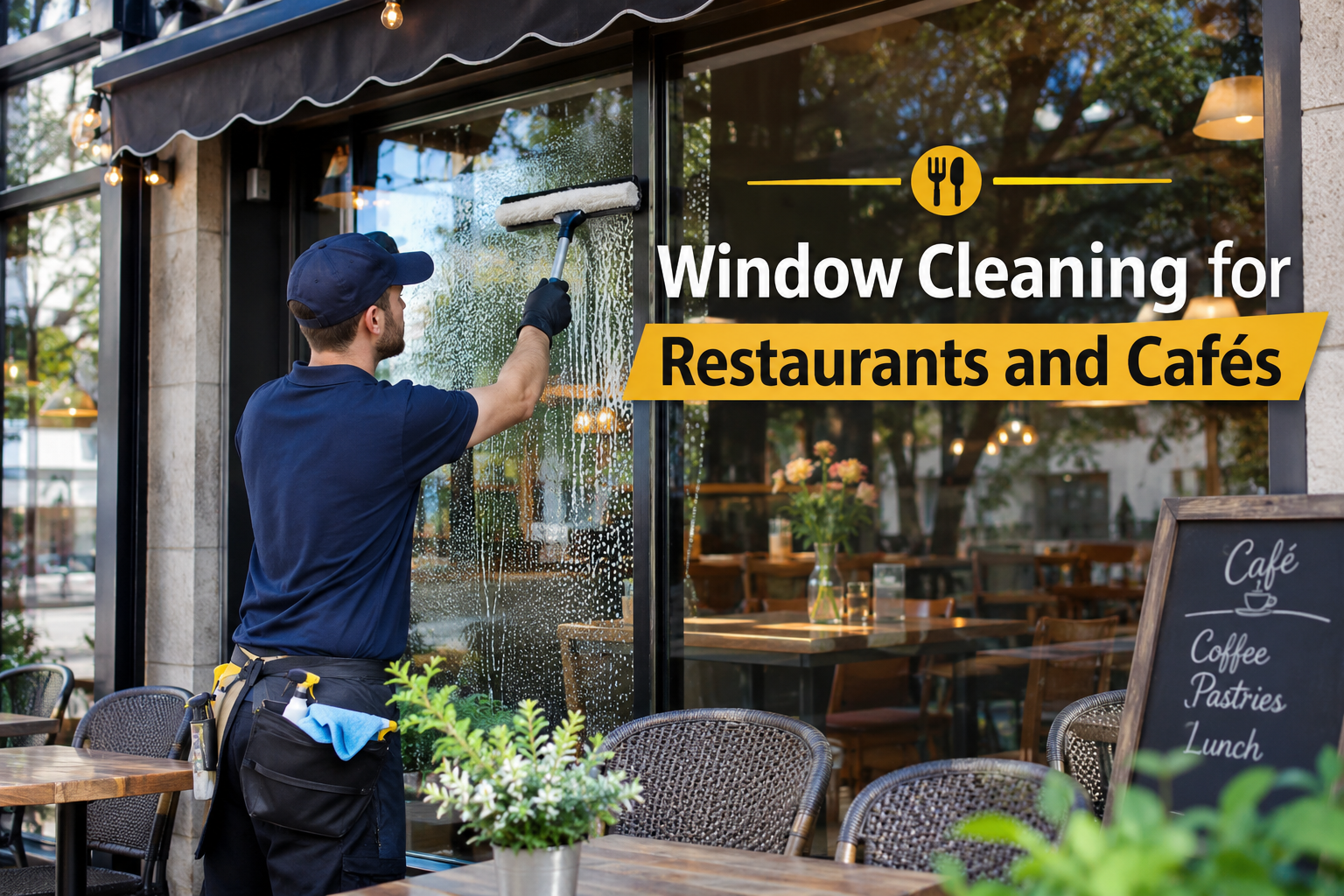
A spotless restaurant window does more than let in daylight. It creates an inviting first impression, showcases your dining space and reassures customers that cleanliness matters before they've even stepped through the door.
For restaurants, cafés, coffee shops and other hospitality venues, professional window cleaning is an essential part of maintaining attractive, welcoming premises. From removing greasy fingerprints on entrance doors to tackling stubborn traffic film on street-facing glazing, regular cleaning keeps your business looking its best.
Here's what every hospitality business owner should know:
-
First impressions influence customer perceptions. Clean windows help create an appealing shopfront and allow customers to see inside your establishment.
-
Hospitality glazing needs specialist attention. Fingerprints, cooking residue, food splashes, condensation marks and airborne grime can accumulate quickly.
-
Cleaning frequency depends on your premises. Busy high-street restaurants may benefit from daily glass touch-ups and weekly professional visits, while quieter cafés may need less frequent attention.
-
Professional cleaning covers more than windows. Glass entrance doors, frames, sills, partitions, conservatories and outdoor dining areas may all require maintenance.
-
Different cleaning methods suit different surfaces. Traditional techniques, purified water systems and water-fed poles can each play a role in achieving streak-free results.
-
Convenient scheduling matters. Cleaning before opening, between service periods or after closing can minimise disruption to customers and staff.
-
Local expertise is valuable. Finding experienced commercial window cleaners who understand hospitality environments can make maintaining your premises considerably easier.
Whether you operate a small independent coffee shop, a busy city-centre restaurant or several hospitality venues across the UK, understanding the right approach to commercial glass cleaning can help protect your premises' appearance and simplify routine maintenance.
Why Clean Windows Matter More Than You Might Think in Hospitality
Picture two cafés standing side by side.
Both serve excellent coffee. Both have comfortable seating, friendly staff and tempting menus. Yet one has sparkling glass doors, bright windows and an immaculate shopfront. The other has fingerprints around its entrance, dusty window frames and streaks running down its front glazing.
Which one looks more inviting?
Customers cannot judge the quality of your food before entering, but they can certainly form an impression of your premises.
Your windows are part of your business's first impression.
For hospitality operators, clean glazing contributes to several important aspects of the customer experience.
1. A welcoming shopfront that attracts attention
A restaurant's exterior is often its first opportunity to communicate quality.
Whether someone is walking along a busy shopping street, browsing nearby eateries or deciding where to stop for lunch, the appearance of your frontage can influence how welcoming your business feels.
Professional restaurant shopfront cleaning helps remove:
-
Fingerprints and handprints from entrance glass.
-
Rain spots and mineral deposits.
-
Road dust and traffic-related grime.
-
Greasy smears around frequently touched surfaces.
-
Bird droppings and environmental contamination.
-
Dirt accumulating around window frames and sills.
Clean windows also make it easier for passers-by to see attractive interiors, comfortable seating and inviting dining areas.
For independent cafés, this visibility can be particularly useful. A bright, welcoming café shopfront allows potential customers to glimpse the atmosphere inside rather than looking through a layer of dirty glass.
A useful principle for hospitality businesses: Your windows should complement the experience you're selling, not distract from it.
2. Brighter interiors and a better dining atmosphere
Natural light can transform how a restaurant or coffee shop feels.
Large glass panels, floor-to-ceiling windows and glazed entrance doors help connect indoor dining spaces with the surrounding environment.
However, accumulated dirt can make glazing appear dull, particularly when sunlight catches fingerprints, smears and water marks.
Regular interior and exterior window cleaning helps maintain clear glazing, allowing available daylight to enter without unnecessary obstruction from surface grime.
This is especially relevant for:
-
Restaurants with large street-facing windows.
-
Coffee shops featuring window-side seating.
-
Cafés with conservatories or glazed extensions.
-
Bistros overlooking gardens or terraces.
-
Restaurants with panoramic dining-area glazing.
-
Hospitality venues incorporating glass partitions.
For establishments where atmosphere is a major selling point, spotless glass cleaning contributes to a brighter, more polished environment.
3. Reinforcing your standards of cleanliness
Customers naturally pay attention to cleanliness when choosing somewhere to eat.
While clean windows alone cannot demonstrate food hygiene standards, visibly dirty glass, greasy entrance doors and neglected frames can create an unfavourable impression.
This is particularly noticeable around busy restaurant entrances, where customers repeatedly touch door handles and surrounding glass.
Routine restaurant glass cleaning services help keep these high-visibility areas presentable throughout the trading week.
It's also worth distinguishing between two types of cleaning:
-
Professional scheduled cleaning: A thorough service covering agreed glazing, frames, sills and other surfaces.
-
Everyday touch-up cleaning: Quick removal of fingerprints, food splashes and obvious marks between professional visits.
Combining both approaches can help hospitality venues maintain a consistently tidy appearance.
4. Protecting the appearance of your property
Restaurant windows face different environmental conditions depending on location.
A seaside café may experience salt deposits on its glazing. A city-centre restaurant might contend with traffic film and airborne pollutants. A rural pub or restaurant could encounter pollen, insects, bird droppings and seasonal dirt.
Over time, neglected contamination can become more difficult to remove.
Regular maintenance helps reduce the accumulation of stubborn deposits and provides opportunities to notice deteriorating seals, damaged frames or other visible issues.
However, ordinary window cleaning does not repair damaged glazing or guarantee protection against permanent glass deterioration. Existing scratches, etching and mineral staining may require specialist assessment.
For businesses operating in different regions, exploring window cleaning locations across the UK can be a useful starting point when looking for relevant local services.
What Does Professional Restaurant and Café Window Cleaning Include?
Not every hospitality property has the same glazing requirements.
A compact takeaway café with two front windows needs a different cleaning approach from a multi-storey restaurant featuring extensive glass façades, conservatories and outdoor seating areas.
A professional commercial window cleaning service should therefore be tailored to the building, its accessibility and the surfaces requiring attention.
Here's a closer look at the areas commonly involved.
Exterior window cleaning
Exterior glazing is exposed to the weather, passing traffic, dust and other environmental contaminants.
Restaurant exterior glass cleaning typically focuses on removing visible dirt from accessible window surfaces while leaving a clean, streak-free finish.
Depending on the property, this may involve:
-
Ground-floor shopfront windows.
-
Street-facing restaurant glazing.
-
Upper-storey windows.
-
Large glass panels.
-
Glazed entrance areas.
-
Accessible conservatory windows.
-
Exterior patio doors.
For many hospitality premises, exterior glass requires more frequent attention than less exposed interior windows.
Restaurants beside busy roads, pedestrianised shopping areas or coastal environments may experience particularly noticeable surface contamination.
Interior window cleaning
Inside a restaurant or café, windows encounter a different collection of marks.
Customers lean against glass, children leave fingerprints, staff handle entrance doors and food or drink can occasionally splash onto nearby surfaces.
Cooking activity may also contribute to greasy residue, particularly where ventilation or the layout allows airborne deposits to reach glazing.
Professional interior window cleaning helps address these problems using methods appropriate to the surface and surrounding furnishings.
Typical tasks may include:
-
Removing fingerprints and smudges.
-
Cleaning accessible internal window panes.
-
Wiping marks from glass entrance doors.
-
Addressing light grease and food-related residue.
-
Cleaning agreed internal glazing around seating areas.
-
Removing visible water marks where ordinary cleaning is suitable.
Extra care is needed around dining tables, upholstered seating, electrical equipment and food preparation areas.
Cleaning solutions and equipment should be selected and used appropriately to avoid unnecessary mess, contamination or disruption.
Glass entrance doors and customer-facing glazing
Restaurant glass door cleaning deserves particular attention.
Entrance doors experience constant contact, especially during breakfast, lunchtime and evening service.
Even a recently cleaned restaurant can develop visible fingerprints around door handles within hours.
For this reason, many businesses benefit from treating entrance glass as a separate daily housekeeping priority.
Areas worth monitoring include:
-
Main entrance doors.
-
Glazed vestibules.
-
Door-side glass panels.
-
Internal glass doors.
-
Glass partitions near customer seating.
-
Accessible display glazing.
Regular touch-ups between scheduled professional visits can help prevent these frequently handled surfaces from looking neglected.
Window frames, sills and surrounding details
Sparkling glass loses some of its impact when surrounded by dirty frames.
Window frame cleaning and window sill cleaning are therefore worth discussing when arranging a commercial service.
Depending on the agreed specification, a cleaner may also address accessible edges, surrounding trim and other areas where dirt collects.
Before booking, confirm whether the quotation includes:
-
Glass panes only.
-
Window frames.
-
External window sills.
-
Internal window sills.
-
Entrance doors.
-
Glazed partitions.
-
Additional conservatory or terrace glazing.
Not every provider includes all these elements in a standard price, so agreeing the scope beforehand avoids misunderstandings.
Conservatories, terraces and outdoor dining areas
Hospitality venues increasingly make use of glazed spaces to create attractive dining environments.
Conservatories, enclosed terraces and glass-sided seating areas can provide appealing views while protecting diners from the weather.
However, these features also introduce additional cleaning requirements.
Restaurant conservatory window cleaning may involve large vertical panes, awkward corners and glazing that requires specialist access.
Outdoor dining area glass cleaning can include patio doors, glass balustrades and transparent windbreak panels.
These surfaces are often exposed to rain, dust, fingerprints and food-related marks.
Some glass roofs, canopies and high-level panels require separate equipment, safety assessments or specialist cleaning arrangements.
They should not automatically be assumed to form part of an ordinary window cleaning visit.
The Different Window Cleaning Methods Used in Restaurants and Cafés
Achieving consistently clean glass is not simply a matter of spraying a window and wiping it with a cloth.
Professional window cleaners choose methods based on the type of glazing, access requirements, level of contamination and surrounding environment.
For hospitality businesses, understanding these techniques makes it easier to discuss the right service with a prospective cleaning provider.
Traditional window cleaning
Traditional window cleaning remains a practical method for many restaurant and café premises.
It generally involves applying an appropriate cleaning solution, loosening dirt and removing the liquid using a professional squeegee.
Detailing cloths may then be used around edges and corners.
Traditional methods are particularly useful for:
-
Interior restaurant windows.
-
Accessible ground-floor glazing.
-
Café entrance doors.
-
Glass partitions.
-
Smaller shopfront windows.
-
Areas requiring detailed removal of fingerprints.
When carried out correctly, this method can produce an excellent streak-free finish.
It also allows cleaners to pay close attention to individual panes and heavily marked areas.
However, traditional cleaning may require suitable access arrangements for higher windows, and it is not necessarily the most efficient option for every commercial building.
Pure water window cleaning
Pure water window cleaning is widely used for external glazing, particularly where water-fed pole systems provide suitable access.
The process involves filtering water to remove dissolved impurities before using it to wash and rinse the glass.
Because properly purified water contains very low levels of dissolved minerals, it can dry without the mineral spotting associated with ordinary tap water when used correctly.
This approach can be especially useful for restaurants featuring extensive exterior glazing.
Potential advantages include:
-
Access to suitable upper-level windows from the ground.
-
Reduced reliance on ladders for certain tasks.
-
Efficient cleaning of multiple exterior panes.
-
The ability to clean some frames and sills during the same process.
-
Reduced need for added cleaning detergents in routine applications.
Purified water window cleaning is not automatically suitable for every type of contamination.
Heavy grease, stubborn deposits and certain specialist surfaces may require additional treatment or alternative methods.
Water-fed pole window cleaning
Water-fed pole window cleaning uses extendable poles equipped with brushes and a water supply, commonly incorporating purified water.
This enables suitably trained cleaners to reach many external windows while remaining at ground level.
For restaurants with upper-floor dining rooms or large glazed façades, the technique can offer practical access benefits.
It is also frequently described as reach-and-wash window cleaning.
The suitability of this method depends on building height, access, surrounding obstacles and the condition of the glazing.
It should not be assumed that every upper-floor window can safely or effectively be cleaned using a pole system.
Which cleaning method is best for a hospitality business?
There isn't one universally superior technique.
The right choice depends on what needs cleaning.
| Cleaning requirement | Commonly suitable approach |
|---|---|
| Fingerprints on interior glass | Traditional hand cleaning |
| Accessible café entrance doors | Squeegee and detailing |
| Routine exterior glazing | Traditional or purified water cleaning |
| Suitable upper-storey exterior windows | Water-fed pole system |
| Greasy restaurant glass | Appropriate degreasing and detailed cleaning |
| Large exterior glass panels | Method selected according to access and surface |
| Delicate or specialist glazing | Manufacturer-approved specialist method |
For many restaurants and cafés, a combination of techniques provides the most practical solution.
Exterior windows might be maintained using purified water, while internal glass doors and partitions receive traditional hand cleaning.
The important thing is to choose a method that delivers the required standard without compromising safety or disrupting the restaurant's operations.
How Often Should Restaurant and Café Windows Be Cleaned?
One of the most common questions hospitality business owners ask is simple: How frequently should professional window cleaning be scheduled?
The answer depends on your location, customer footfall, building design and the type of establishment you operate.
A bustling city-centre restaurant with floor-to-ceiling glazing will usually have different requirements from a quiet countryside café with a handful of windows.
There's no universal cleaning schedule that works for every hospitality venue. However, establishing a sensible routine can help keep your premises looking welcoming without paying for unnecessary visits.
Daily window cleaning: For high-traffic areas
Some surfaces need attention every day, particularly those customers regularly touch.
Think about a busy coffee shop during the morning rush. Customers enter and leave constantly, children press their hands against windows, and fingerprints quickly appear around the entrance.
By lunchtime, yesterday's spotless glass doors might already look tired.
Daily cleaning is particularly useful for:
-
Restaurant entrance doors and surrounding glass.
-
Café display windows with frequent customer contact.
-
Internal glass partitions near dining tables.
-
Glass panels around busy takeaway counters.
-
Accessible windows affected by food or drink splashes.
-
Customer-facing glazing with obvious fingerprints.
These tasks can often be incorporated into routine staff housekeeping, provided appropriate cleaning products and safe procedures are used.
Daily touch-ups don't necessarily mean booking professional window cleaners every morning.
Instead, they complement a more thorough scheduled cleaning service.
Weekly window cleaning: For busy restaurants and cafés
Weekly restaurant window cleaning can be a practical option for businesses with substantial footfall or prominent street-facing glazing.
High-street restaurants, city-centre cafés and coffee shops beside busy roads often experience noticeable dirt accumulation.
Regular professional visits can help prevent grime from building up between cleans.
Weekly cleaning may be particularly suitable for:
-
Busy restaurants in shopping districts.
-
Coffee shops with extensive front glazing.
-
Cafés near main roads or transport hubs.
-
Restaurants with heavily used glass entrances.
-
Hospitality venues where the shopfront is central to attracting customers.
A weekly service can focus on the most visible windows while less exposed glazing receives attention at longer intervals.
For example, a restaurant might arrange weekly exterior shopfront cleaning alongside monthly internal window maintenance.
This flexible approach can help balance appearance with operating costs.
Fortnightly window cleaning: A practical middle ground
Not every hospitality business needs a professional visit each week.
Fortnightly window cleaning may offer a sensible compromise for establishments where dirt accumulates more gradually.
A neighbourhood café on a quieter street, for instance, might maintain an attractive frontage with professional cleaning every two weeks and occasional staff touch-ups.
Fortnightly visits may suit:
-
Independent cafés with moderate customer traffic.
-
Small restaurants away from busy roads.
-
Coffee shops with limited exterior glazing.
-
Bistros operating primarily during evening hours.
-
Hospitality venues with sheltered entrances.
The key is to monitor how quickly your windows become visibly dirty.
If fingerprints, rain marks or road grime consistently become noticeable before the next appointment, a more frequent schedule may be worthwhile.
Monthly window cleaning: For lower-maintenance premises
Monthly window cleaning can be appropriate for some restaurants and cafés, particularly those in sheltered locations or with relatively low levels of exterior contamination.
However, a monthly professional visit shouldn't replace everyday attention to obvious marks on entrance doors or customer-facing glass.
A monthly arrangement might cover:
-
Thorough exterior window cleaning.
-
Agreed interior glazing.
-
Accessible window frames and sills.
-
Glass entrance doors.
-
Selected partitions or additional glazing.
For some businesses, monthly cleaning forms the foundation of a wider maintenance programme, with more frequent attention given to high-contact surfaces.
Recommended cleaning frequency by hospitality venue
The following table provides a useful starting point rather than a fixed industry requirement.
| Hospitality business | Suggested professional cleaning frequency | Additional maintenance |
|---|---|---|
| Busy high-street restaurant | Weekly | Daily entrance glass touch-ups |
| Independent neighbourhood café | Weekly or fortnightly | Regular fingerprint removal |
| City-centre coffee shop | Weekly | Daily customer-facing glass checks |
| Fine dining restaurant | Weekly or fortnightly | Frequent entrance and interior glass detailing |
| Rural café or tearoom | Fortnightly or monthly | As-needed spot cleaning |
| Restaurant beside a major road | Weekly or more frequently if needed | Regular traffic-film monitoring |
| Coastal restaurant or café | Weekly or fortnightly, depending on exposure | Additional attention to salt deposits |
| Multi-site restaurant chain | Site-specific scheduled programme | Consistent maintenance standards |
The best cleaning schedule is one that keeps your glazing presentable between visits without creating unnecessary expense.
A reputable commercial window cleaning provider should be able to discuss your requirements and recommend a suitable maintenance frequency.
Restaurant Window Cleaning Prices: What Affects the Cost?
For restaurant owners and café managers, maintaining attractive premises is important. So is controlling overheads.
Naturally, one of the first questions when considering a professional service is:
How much does commercial window cleaning cost?
There isn't a single price that accurately represents every restaurant or café across the UK.
A small coffee shop with two accessible front windows will usually cost less to clean than a large restaurant with multiple floors, extensive glazing and difficult access.
Rather than relying on a generic price, it helps to understand what influences a quotation.
1. The size and number of windows
The amount of glazing is one of the most obvious pricing factors.
A compact café might have:
-
Two large shopfront windows.
-
One glazed entrance door.
-
Several smaller interior panes.
A larger restaurant could feature dozens of windows, full-height glass walls, conservatory glazing and external glass partitions.
More surfaces generally mean additional cleaning time, although the size, layout and accessibility of the glass also matter.
2. Accessibility and building height
Ground-floor window cleaning is often relatively straightforward when the surrounding area is safe and accessible.
High-level window cleaning may require additional planning, specialist equipment or alternative access arrangements.
For example, upper-floor restaurant windows might be suitable for water-fed pole cleaning, while other glazing may require a different approach.
Potential complications include:
-
Restricted pedestrian access.
-
Narrow pavements.
-
Obstacles around the building.
-
Awkwardly positioned glazing.
-
Sloping ground.
-
Fragile surfaces or architectural features.
-
Areas requiring specialist access equipment.
These factors can influence both the cleaning method and the final quotation.
3. Interior versus exterior cleaning
Some restaurants only require regular exterior window cleaning.
Others prefer a complete inside-and-out service.
Interior cleaning may involve moving carefully around dining tables, seating, decorative features and customers' belongings.
It can also require additional detailing to remove fingerprints, grease and food-related marks.
When requesting a quotation, specify whether you need:
-
Exterior windows only.
-
Interior windows only.
-
Complete inside and outside window cleaning.
-
Entrance glass and doors.
-
Window frames and sills.
-
Additional glass partitions or conservatory glazing.
This makes it easier to compare quotations on a like-for-like basis.
4. Cleaning frequency
Regular window cleaning services may be priced differently from one-off visits.
A cleaner attending the same restaurant every week may be able to establish an efficient routine, particularly where access arrangements and cleaning requirements remain consistent.
One-off commercial window cleaning may require more time if dirt has accumulated over several months.
However, regular contracts do not automatically guarantee a lower price. The cost depends on the provider, property and agreed scope of work.
5. The condition of the glass
Light dust and ordinary rain marks are usually easier to remove than stubborn grease, adhesive residue or heavy mineral deposits.
A restaurant that hasn't had its exterior glazing cleaned for a considerable period may need an initial deep clean before moving onto routine maintenance.
Specialist stain removal, post-construction window cleaning and restoration work may be charged separately.
Always clarify whether these services are included before agreeing to a booking.
How to get an accurate restaurant window cleaning quote
When comparing professional café window cleaners or restaurant cleaning companies, provide as much relevant information as possible.
A useful quotation request should include:
-
Your business location: The town, city and postcode.
-
Property type: Restaurant, café, coffee shop, bistro or other hospitality premises.
-
Approximate glazing requirements: Number of windows, floors and any large glass areas.
-
Cleaning scope: Exterior, interior or both.
-
Preferred frequency: Weekly, fortnightly, monthly or one-off.
-
Access considerations: Restricted areas, high-level windows or unusual glazing.
-
Preferred appointment times: Before opening, after closing or during quieter trading periods.
Photographs may also help a prospective provider understand the property, although an on-site assessment may still be necessary.
If you're comparing services, you can request a window cleaning quote through Pivotal Window Cleaning and provide details of your hospitality premises.
The goal shouldn't simply be to find the cheapest quotation.
It should be to identify a suitable service that delivers reliable results, appropriate safety standards and good value for your business.
Flexible Window Cleaning Around Restaurant and Café Opening Hours
Hospitality businesses operate on demanding schedules.
Coffee shops may open before commuters arrive. Restaurants often prepare for lunch and evening service hours in advance. Some venues remain busy late into the night.
Introducing cleaning equipment into a crowded dining area at the wrong time can cause unnecessary inconvenience.
That's why scheduling deserves careful consideration when arranging hospitality window cleaning.
Early morning cleaning before opening
For many cafés and breakfast venues, early morning window cleaning is worth exploring.
Cleaning before customers arrive can allow work to take place without interrupting the dining experience.
Potential advantages include:
-
Clearer access to entrance doors and shopfronts.
-
Fewer pedestrians around the immediate frontage.
-
Reduced interference with customer seating.
-
More convenient access to internal glazing.
-
A clean appearance before the first customers arrive.
However, early morning availability varies between providers.
It's important to confirm appointment times rather than assuming every commercial cleaning company offers this service.
Cleaning between restaurant service periods
Some restaurants experience quieter periods between lunch and dinner.
These intervals may provide an opportunity for routine window maintenance, particularly where staff are already preparing the premises for the next service.
For example, a restaurant that closes its dining room during the afternoon might arrange cleaning during that window.
The suitability of this approach depends on staff activity, deliveries, access requirements and the cleaning methods involved.
Evening and out-of-hours window cleaning
Out-of-hours restaurant window cleaning can be useful for establishments where daytime cleaning would be impractical.
This might include:
-
Restaurants with constant daytime footfall.
-
Busy cafés with limited access around seating.
-
Hospitality venues in pedestrian-heavy locations.
-
Restaurants requiring extensive internal glass cleaning.
-
Businesses operating across multiple sites.
Evening or weekend availability should be confirmed directly with the service provider.
Additional charges may apply for unusual appointment times.
Minimising disruption to customers and staff
Professional commercial window cleaners should consider the working environment before beginning.
In hospitality settings, this may involve coordinating with management, keeping equipment away from customer walkways and ensuring cleaning activities don't interfere with food service.
A sensible arrangement should account for:
-
Safe access around entrances and exits.
-
Clear pedestrian routes.
-
Suitable handling of cleaning solutions.
-
Slip and trip hazards.
-
Protection of furniture and nearby equipment.
-
Food preparation and serving areas.
-
Communication with restaurant staff.
The objective is straightforward: clean windows without creating unnecessary disruption to the business.
Choosing Reliable Commercial Window Cleaners for Your Hospitality Business
Not all window cleaning services have the same experience, equipment or working practices.
For restaurants and cafés, choosing a suitable provider involves more than finding someone who can make glass look clean.
You need a service that understands commercial premises, works safely and can accommodate the practical demands of a hospitality environment.
Look for relevant commercial cleaning experience
Residential window cleaning and commercial hospitality cleaning share many techniques, but the working environments can differ considerably.
Restaurants may have larger glass panels, frequent customer movement, complicated access arrangements and strict operating schedules.
When comparing restaurant window cleaners, ask whether they have experience with similar premises.
Relevant experience might include:
-
Restaurants and bistros.
-
Independent cafés.
-
Coffee shop chains.
-
Pubs and bars.
-
Hotels and hospitality venues.
-
Retail shopfronts.
-
Commercial buildings with extensive glazing.
A provider familiar with these environments may be better placed to anticipate practical access and scheduling issues.
Check insurance and safety arrangements
Commercial cleaning work can involve equipment, water, cleaning products and access to areas used by staff or customers.
Before arranging a service, ask about the provider's insurance and safety procedures.
Depending on the work, relevant considerations may include:
-
Public liability insurance.
-
Employer's liability insurance where legally required.
-
Suitable training and competence.
-
Risk assessments.
-
Safe working-at-height procedures.
-
Appropriate cleaning equipment.
-
Safe management of pedestrian access.
-
Procedures for handling cleaning chemicals.
For higher-risk tasks, additional documentation or specialist arrangements may be appropriate.
Don't assume that every window cleaner has identical insurance coverage or qualifications. Ask for confirmation relevant to the proposed work.
Ask exactly what's included
Two window cleaning quotations may appear similar while covering very different services.
One company might quote for exterior glass only.
Another may include frames, sills, entrance doors and selected internal glazing.
Before booking, establish:
-
Which windows will be cleaned?
-
Are both sides included?
-
Will frames and sills receive attention?
-
Are glass doors included?
-
Is high-level glazing covered?
-
Are additional charges likely?
-
How will access be arranged?
-
What happens if a scheduled visit needs to change?
Clear expectations make it easier to maintain a productive working relationship.
Prioritise reliability and communication
Consistency is particularly valuable for hospitality businesses.
A missed cleaning visit before a busy weekend can leave an otherwise well-presented restaurant looking less polished than expected.
Look for providers who communicate clearly about appointment arrangements, access requirements and changes to the schedule.
A good service relationship should make maintenance easier to manage, not create additional administrative work.
Compare value rather than price alone
Affordable restaurant window cleaning doesn't necessarily mean choosing the lowest available quotation.
A cheaper service that excludes important areas or requires repeated follow-up visits may not offer the best overall value.
Consider the full package:
| Factor | What to look for |
|---|---|
| Experience | Familiarity with commercial and hospitality glazing |
| Insurance | Appropriate cover for the proposed work |
| Cleaning scope | Clear details of included surfaces |
| Reliability | Agreed visits and effective communication |
| Flexibility | Scheduling that suits your trading hours |
| Equipment | Suitable methods for your property |
| Pricing | Transparent quotations and any additional charges |
| Consistency | A dependable standard of cleaning |
Taking time to compare these details can help you find a commercial window cleaning company suited to your premises and budget.
Window Cleaning for Independent Cafés Versus Restaurant Chains
A single independent café and a national restaurant chain may both need clean windows, but their maintenance requirements can be very different.
Understanding these differences helps businesses choose an appropriate service arrangement.
Independent cafés and coffee shops
For smaller hospitality businesses, simplicity and affordability are often priorities.
An independent café owner may personally manage cleaning schedules alongside staffing, stock ordering and customer service.
A practical café window cleaning arrangement should therefore be easy to organise and suited to the size of the premises.
Common priorities include:
-
Regular cleaning of the front shop window.
-
Spotless glass entrance doors.
-
Flexible appointments around opening hours.
-
Straightforward pricing.
-
Occasional interior glass cleaning.
-
Reliable communication with the cleaning provider.
For many independent establishments, a weekly or fortnightly arrangement may be sufficient, depending on the location and condition of the glazing.
Larger restaurants and hospitality venues
Larger restaurants may have extensive glazed areas requiring more time and specialist attention.
These can include:
-
Full-height dining room windows.
-
Multiple entrance doors.
-
Internal glass partitions.
-
Conservatories and glazed extensions.
-
Outdoor terraces with glass balustrades.
-
Upper-storey windows.
-
Large exterior glass façades.
The cleaning specification may need to distinguish between frequently maintained areas and glazing requiring less regular attention.
For example, customer-facing entrance doors might need weekly professional cleaning, while selected high-level exterior panels receive less frequent maintenance.
Multi-site restaurant chains and franchises
Businesses operating several locations face an additional challenge: maintaining consistent presentation across different properties.
One restaurant may occupy a modern glass-fronted building, while another operates from a converted high-street property.
Their cleaning requirements won't necessarily be identical.
A multi-site restaurant window cleaning programme may therefore benefit from:
-
A clear cleaning specification for each property.
-
Agreed service frequencies.
-
Defined responsibilities for interior and exterior glazing.
-
Consistent safety and insurance requirements.
-
Arrangements for reporting missed or incomplete work.
-
Clear communication with individual site managers.
-
Periodic reviews of cleaning requirements.
For businesses operating nationally, finding suitable local commercial window cleaners across different towns and cities can become an important part of property maintenance planning.
The right arrangement should balance consistent expectations with the practical requirements of each location.
Restaurant and Café Window Cleaning Across the UK
From bustling city-centre restaurants to independent countryside cafés, hospitality businesses across the United Kingdom face different window cleaning challenges.
Location plays an important role in determining how quickly glazing becomes dirty, which cleaning methods are practical and how frequently professional maintenance may be required.
A restaurant overlooking a busy London street, for example, may experience considerably more traffic-related grime than a small tearoom in a quiet village.
Similarly, a coastal café exposed to salt-laden air may need a different maintenance routine from a restaurant situated in a sheltered retail development.
Understanding these regional differences can help hospitality businesses arrange suitable commercial window cleaning services without adopting a one-size-fits-all approach.
Window cleaning for city-centre restaurants
Restaurants in major cities such as London, Manchester, Birmingham, Leeds, Liverpool and Glasgow often operate in demanding environments.
Heavy pedestrian traffic, vehicle emissions, construction activity and limited access can all affect the condition of external glazing.
For city-centre restaurants, common concerns include:
-
Traffic film accumulating on street-facing windows.
-
Fingerprints around heavily used entrance doors.
-
Dust from nearby construction or roadworks.
-
Restricted access along busy pavements.
-
Limited opportunities for cleaning during trading hours.
-
Large shopfront windows requiring regular maintenance.
Professional shopfront window cleaning can help maintain a welcoming appearance, particularly where the restaurant relies on passing trade.
Businesses in these locations may benefit from weekly exterior cleaning, although the appropriate frequency depends on exposure, footfall and the condition of the glass.
Window cleaning for coastal cafés and restaurants
Coastal hospitality businesses face their own challenges.
Restaurants and cafés in locations such as Brighton, Blackpool, Bournemouth, Scarborough, Whitby and Cornwall may experience airborne salt deposits, windblown sand and frequent exposure to coastal weather.
These conditions can leave visible marks on glazing, particularly during windy periods.
For seaside cafés, routine maintenance may need to address:
-
Salt deposits on exterior glass.
-
Windblown sand and surface dirt.
-
Rain marks and streaking.
-
Contamination around window frames.
-
Glass balustrades overlooking outdoor seating areas.
Salt and abrasive particles should be removed using suitable methods rather than aggressively rubbed across the glass.
Regular cleaning can help keep coastal restaurant windows clear and attractive, particularly where sea views are part of the customer experience.
Window cleaning for rural cafés and countryside restaurants
Rural hospitality venues often benefit from attractive surroundings, picturesque views and peaceful settings.
However, countryside locations can still present cleaning challenges.
Pollen, insects, bird droppings, agricultural dust and seasonal debris may accumulate on windows throughout the year.
Restaurants with garden views, conservatories or outdoor seating areas may find that clean glazing plays an important role in showcasing their surroundings.
For these properties, maintenance priorities may include:
-
Conservatory window cleaning.
-
Restaurant patio door cleaning.
-
Exterior glass cleaning around garden seating.
-
Removal of pollen and seasonal dirt.
-
Cleaning accessible window frames and sills.
-
Glass balustrade maintenance.
A fortnightly or monthly cleaning programme may suit some rural establishments, with additional visits arranged when environmental conditions demand them.
Commercial window cleaning in Middlesbrough and Teesside
Middlesbrough and the wider Teesside area offer a useful example of how cleaning requirements vary between nearby hospitality locations.
A busy restaurant in Middlesbrough town centre may require frequent attention to its entrance glazing and street-facing windows.
Meanwhile, a café in Stokesley, a restaurant in Yarm or a hospitality venue in Guisborough may experience different levels of footfall, traffic pollution and environmental contamination.
Businesses looking for restaurant window cleaning in Middlesbrough or café window cleaning across Teesside should consider their individual premises rather than relying solely on a standard cleaning package.
Areas where hospitality businesses may require professional glass maintenance include:
-
Middlesbrough
-
Stockton-on-Tees
-
Thornaby
-
Redcar
-
Hartlepool
-
Billingham
-
Yarm
-
Stokesley
-
Guisborough
-
Ingleby Barwick
Whether you're comparing restaurant window cleaners in Teesside or looking for a local commercial window cleaning company elsewhere in the country, the same principle applies: choose a service suited to your property, operating hours and maintenance requirements.
Common Restaurant Window Cleaning Problems and How to Prevent Them
Restaurant and café windows encounter a surprisingly wide range of contaminants.
Some are caused by everyday customer activity. Others result from cooking, weather conditions or the surrounding environment.
Understanding what causes these marks makes it easier to establish an effective maintenance routine.
Grease and cooking-related residue
Greasy restaurant glass can be particularly frustrating.
Airborne cooking residue may settle on nearby surfaces, especially where glazing is close to cooking areas or ventilation is inadequate.
Unlike ordinary dust, greasy deposits can smear when cleaned using unsuitable products or techniques.
For affected windows, appropriate cleaning solutions and careful removal methods are important.
To help reduce grease-related problems:
-
Maintain kitchen extraction and ventilation systems appropriately.
-
Address visible residue before it becomes heavily established.
-
Use cleaning products suitable for the glazing.
-
Avoid spreading grease with dirty cloths.
-
Arrange professional deep cleaning where ordinary maintenance is insufficient.
Restaurant grease and fingerprint removal may require more detailed work than routine exterior window cleaning.
It's worth mentioning these issues when requesting a quotation so the provider can assess the cleaning requirements.
Fingerprints and smudged entrance doors
Few surfaces reveal customer activity quite as clearly as glass entrance doors.
Every push, pull and accidental touch can leave a visible mark.
During busy periods, fingerprints may accumulate rapidly around door handles and lower glass panels.
A simple daily routine can make a noticeable difference.
Staff can inspect entrance glass during quieter periods and remove obvious marks using appropriate products and clean cloths.
Professional cleaning can then address the complete door surface, edges and surrounding glazing during scheduled visits.
Water marks and mineral deposits
Water spots can develop when droplets containing dissolved minerals dry on glass.
These marks are often more noticeable in direct sunlight.
Routine purified water window cleaning can help reduce mineral spotting associated with the cleaning water itself.
However, existing hard-water deposits may require additional treatment.
Not all staining can be removed through ordinary cleaning, particularly where deposits have caused permanent surface damage.
Avoid abrasive materials or unsuitable chemicals that could scratch the glass or damage surrounding frames.
Traffic film and environmental pollution
Restaurants beside busy roads may notice a dull film developing on their exterior windows.
This contamination can contain dust, airborne particles and residues associated with vehicle traffic.
Over time, it may reduce the clarity of the glass and make the shopfront appear less attractive.
Regular exterior window cleaning helps remove routine surface contamination before it becomes heavily established.
Properties exposed to significant traffic may benefit from more frequent professional visits.
Bird droppings, insects and seasonal dirt
Bird droppings and insect residue can be particularly noticeable on large restaurant windows.
These deposits should be removed carefully using suitable cleaning methods.
Allowing contamination to soften before removal can help reduce the risk of scratching from trapped particles.
Seasonal conditions also influence cleaning requirements.
Spring pollen, summer insects, autumn debris and winter road grime can all affect the appearance of hospitality glazing.
A flexible maintenance programme allows businesses to respond to these changes.
A Practical Window Cleaning Maintenance Checklist for Hospitality Businesses
Maintaining spotless café windows doesn't have to become a complicated administrative task.
A straightforward cleaning checklist can help staff identify obvious problems while ensuring professional visits address the wider glazing requirements.
The following schedule can be adapted to suit the size and activity of your establishment.
Daily checks
- Inspect main entrance glass for fingerprints.
- Remove visible smudges from customer-facing doors.
- Check accessible interior glass for food and drink splashes.
- Inspect window-side seating areas for obvious marks.
- Remove suitable surface contamination using approved cleaning products.
- Report damaged glass, loose fittings or other safety concerns.
Weekly checks
- Review the appearance of street-facing windows.
- Check whether exterior glazing requires professional attention.
- Inspect accessible window frames and sills.
- Look for greasy residue around relevant interior glazing.
- Check glass partitions and customer-facing panels.
- Confirm upcoming professional cleaning appointments.
Monthly checks
- Review whether the cleaning frequency remains suitable.
- Inspect less frequently cleaned windows.
- Check conservatory and terrace glazing.
- Identify stubborn staining requiring specialist assessment.
- Review the condition of window seals and frames.
- Discuss recurring problems with the cleaning provider.
Seasonal maintenance
- Assess pollen and insect contamination during spring and summer.
- Check for salt deposits at coastal properties.
- Review autumn debris and weather-related dirt.
- Monitor winter road grime and rain marks.
- Consider additional cleaning before major events or busy trading periods.
Maintenance tip: Keep a simple record of professional cleaning visits and any recurring glazing problems. This makes it easier to adjust your cleaning schedule based on actual conditions rather than guesswork.
A consistent routine can also help staff understand which tasks they should manage internally and which should be left to trained commercial window cleaners.
One-Off Window Cleaning or a Regular Commercial Cleaning Contract?
Hospitality businesses generally have two broad options when arranging professional window maintenance: individual cleaning visits or an ongoing service agreement.
Neither approach is automatically better.
The most suitable arrangement depends on your premises, budget and operational requirements.
When one-off restaurant window cleaning makes sense
A one-off commercial window cleaning service can be useful when a restaurant needs additional attention outside its normal maintenance routine.
Common situations include:
-
Preparing for a restaurant opening.
-
Cleaning before a major event.
-
Refreshing premises following refurbishment.
-
Addressing accumulated dirt after a prolonged closure.
-
Preparing a property for inspection or handover.
-
Cleaning glazing after nearby building work.
For example, a newly refurbished café may require a thorough initial clean before opening to customers.
Post-construction window cleaning can involve specialist considerations, particularly where paint, plaster, adhesive or building residue is present.
These materials should be assessed carefully to avoid damaging the glass.
Benefits of regular restaurant window cleaning contracts
An ongoing cleaning arrangement can make maintenance more predictable.
Instead of arranging individual appointments whenever windows become noticeably dirty, the business agrees a suitable schedule in advance.
Potential benefits include:
-
Consistent presentation: Regular visits help maintain the appearance of customer-facing glazing.
-
Simpler administration: Fewer individual booking arrangements may be required.
-
Predictable scheduling: Cleaning can be planned around normal trading hours.
-
Clear expectations: The agreed cleaning specification defines what is included.
-
Routine maintenance: Dirt can be addressed before significant accumulation occurs.
Regular café window cleaning services can be particularly convenient for businesses with limited management time.
However, contract terms should always be reviewed carefully.
Ask about visit frequency, payment arrangements, cancellation provisions, access requirements and any additional charges.
Which option should you choose?
| Business situation | Potentially suitable option |
|---|---|
| Newly opened restaurant | Initial one-off clean followed by regular maintenance |
| Busy high-street café | Weekly or fortnightly scheduled service |
| Restaurant preparing for an event | Additional one-off clean |
| Small rural tearoom | Periodic service based on actual requirements |
| Multi-site hospitality business | Coordinated scheduled cleaning arrangements |
| Restaurant following refurbishment | Specialist post-construction clean where required |
| Seasonal hospitality venue | Flexible maintenance programme |
For most established restaurants with customer-facing glazing, regular maintenance is worth considering.
The precise frequency should reflect the property rather than an arbitrary industry standard.
Frequently Asked Questions About Restaurant and Café Window Cleaning
How often should restaurant windows be professionally cleaned?
Many busy restaurants benefit from weekly professional window cleaning, particularly when they have prominent street-facing glazing or heavily used entrance doors.
Smaller cafés in quieter locations may find fortnightly or monthly visits sufficient.
Daily staff touch-ups can help remove fingerprints and obvious marks between professional cleans.
How much does restaurant window cleaning cost in the UK?
The price depends on the number and size of windows, building height, accessibility, cleaning frequency and whether interior and exterior glazing are included.
Additional services such as frame cleaning, conservatory glazing or specialist stain removal may affect the quotation.
For an accurate price, provide the cleaning company with details of your premises and the work required.
Can professional window cleaners clean inside and outside restaurant windows?
Yes. Many commercial window cleaning providers offer both interior and exterior cleaning.
However, the exact scope varies between companies.
Always confirm whether the quotation includes both sides of the glass, entrance doors, frames, sills and any additional glazing.
Can restaurant windows be cleaned before opening hours?
Some commercial window cleaners offer early morning appointments or other flexible scheduling options.
This can help reduce disruption to customers and staff.
Availability depends on the provider, location and type of work, so preferred appointment times should be discussed before booking.
Is purified water window cleaning suitable for cafés?
Purified water cleaning is commonly used for suitable exterior windows and can provide a streak-free finish when performed correctly.
It may be particularly useful for larger external glazing areas or windows accessible using water-fed poles.
Interior glass and stubborn greasy deposits may require alternative cleaning methods.
Do café windows need cleaning every week?
Not necessarily.
A busy coffee shop beside a main road may benefit from weekly professional cleaning, while a quieter neighbourhood café may need less frequent visits.
The best approach is to monitor how quickly the glass becomes visibly dirty and adjust the schedule accordingly.
Can window cleaners remove grease and fingerprints from restaurant glass?
Yes, many routine fingerprints and greasy surface deposits can be removed using appropriate professional cleaning techniques.
However, heavily established contamination or specialist glazing may require additional treatment.
Existing scratches, etching or permanent surface damage cannot necessarily be corrected through cleaning.
Are commercial window cleaners fully insured?
Insurance arrangements vary between providers.
Restaurant owners should ask about relevant public liability insurance, employer's liability insurance where applicable and any other cover appropriate to the work.
It's sensible to verify these details before agreeing to a service.
Do professional window cleaners clean glass partitions and patio doors?
Many providers can clean internal glass partitions, patio doors, conservatory glazing and other accessible glass surfaces.
These services may be included in a broader cleaning package or quoted separately.
Always specify the surfaces requiring attention.
Can window cleaning take place while a restaurant is open?
Some cleaning tasks can be completed during trading hours, provided they can be carried out safely and without inappropriate disruption.
However, busy entrances, dining areas and food preparation environments may make certain tasks unsuitable while customers are present.
Cleaning before opening or during quieter periods is often worth considering.
Is weekly restaurant window cleaning better than monthly cleaning?
Weekly cleaning may be more suitable for high-footfall premises or locations exposed to significant dirt.
Monthly cleaning can work well for lower-maintenance properties.
Neither schedule is universally better; the right frequency depends on the condition of the glazing and the presentation standards you want to maintain.
Can window cleaning be arranged for several restaurant locations?
Multi-site cleaning arrangements may be possible, depending on the provider's coverage and service model.
Businesses operating multiple restaurants should discuss individual site requirements, cleaning schedules, reporting arrangements and whether local providers can be coordinated across different locations.
What's included in professional restaurant shopfront cleaning?
A typical service may cover exterior glass panes and, where agreed, entrance doors, frames and sills.
Interior glazing, signage, high-level windows and specialist glass features may require separate arrangements.
The exact specification should be confirmed in writing before work begins.
How do I find local restaurant window cleaners near me?
Start by identifying providers who offer commercial window cleaning in your town or city.
Compare their experience, insurance arrangements, cleaning methods, availability and quotations.
It is also useful to confirm whether they have experience working around hospitality opening hours and customer-facing environments.
Can I arrange emergency restaurant window cleaning?
Some providers may be able to accommodate urgent or short-notice requests, depending on their schedules and local availability.
If you need cleaning before an event, inspection or reopening, explain the deadline when requesting a quotation.
Urgent appointments should not be assumed to be available.
Finding the Right Window Cleaning Service for Your Restaurant or Café
Clean windows are one of those details customers may not consciously notice when everything looks right.
But when glass doors are covered in fingerprints, shopfront windows appear dull or dining-area glazing is streaked with grime, those details can quickly become distracting.
For restaurants and cafés, professional window cleaning is about more than appearance alone.
It's about maintaining a welcoming environment, supporting everyday property care and helping the business present itself professionally.
Whether you run a small independent coffee shop or manage several restaurant locations, the most effective approach begins with understanding your premises.
Consider the size and accessibility of your glazing, the amount of customer traffic, the environmental conditions around the building and how frequently cleaning is genuinely required.
Then choose a suitable service arrangement.
Before making a booking, remember these five essentials:
-
Choose the right frequency. Weekly, fortnightly or monthly cleaning should reflect the actual needs of your business.
-
Clarify the cleaning specification. Establish whether interior windows, exterior glazing, frames, sills and glass doors are included.
-
Prioritise safe working practices. Check insurance, access arrangements and relevant safety procedures.
-
Plan around your customers. Where possible, schedule cleaning to minimise disruption during busy service periods.
-
Compare overall value. Look beyond the headline price and consider reliability, communication and the quality of the proposed service.
A little planning can make ongoing restaurant window maintenance considerably easier.
Looking for professional window cleaning services in the UK?
Pivotal Window Cleaning is a UK-wide window cleaning lead-generation website designed to help people and businesses find relevant window cleaning services.
Whether you need regular café window cleaning, professional restaurant glass cleaning or a quotation for a larger commercial property, providing accurate details about your premises is the best place to start.
For businesses interested in how window cleaning enquiries are generated and connected with relevant services, you can also explore window cleaning lead generation.
Keep your windows clear, your shopfront welcoming and your attention where it belongs: delivering an excellent experience for your customers.