
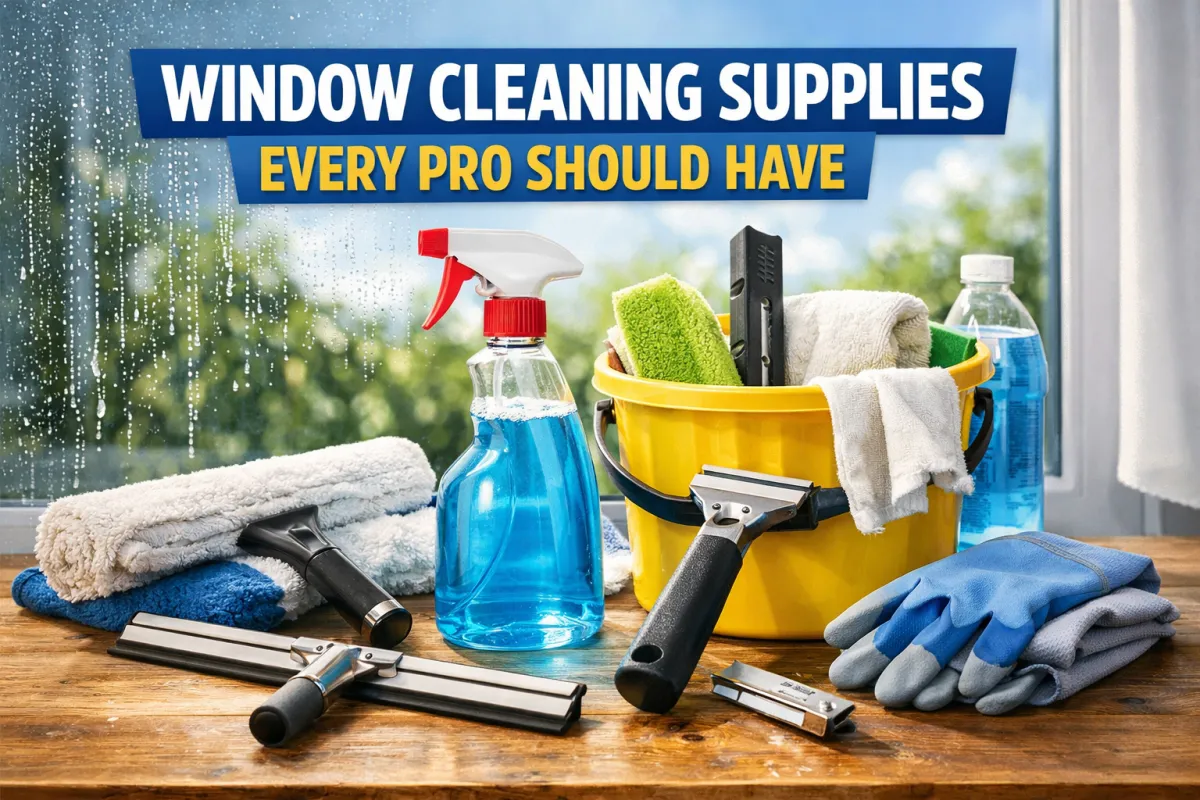
Window Cleaning Supplies Every Pro Should Have
Window cleaning isn't just a job — it’s a precision-driven craft. Whether you’re scaling the side of a commercial skyscraper or perfecting the finish on a bay window, your results are only as good as the tools in your kit. In this article, we break down the essential gear every serious window cleaner should carry, the science behind professional-grade materials, and how these tools directly affect the quality, speed, and safety of your service.
This isn’t just a basic list of supplies. We’ll explore why precision-engineered equipment and eco-conscious choices matter, what separates a streak-free finish from a streaky disaster, and how top-tier tools improve not just results—but reputation. Whether you're an industry veteran or setting up your kit for the first time, this guide will help you make smarter equipment choices and deliver superior work across every job site.
In this guide:
A breakdown of core equipment from squeegees to extendable poles
The science behind cleaning solutions and eco-safe degreasers
What separates a professional setup from a DIY kit
Expert picks for tools that maximise safety, efficiency, and longevity
Bonus gear to elevate your operation beyond the basics
Strategic insights from Pivotal Window Cleaning on scaling your business the smart way
Built for the Job: Why the Right Equipment Matters
There’s a distinct line between casual cleaning and professional window cleaning. The difference? It starts with tools—high-grade, purpose-built equipment that delivers consistent, streak-free finishes under pressure.
The right kit ensures more than just clean glass. It makes the job safer, faster, and more eco-friendly. Whether you're focused on interior/exterior window care for residential clients or commercial cleaning contracts in city centres, a robust setup communicates reliability.
It’s also your first line of defence against wasted hours, do-overs, and damaged surfaces.
"A streak-free finish doesn’t happen by accident. It’s a combination of technique and equipment precision." – Pivotal Window Cleaning Team
1. Core Window Cleaning Tools Every Professional Needs
Let’s start with the backbone of every setup — the tools you’ll use every day. Each one serves a distinct function and contributes to that polished, high-standard finish customers expect.
Squeegee
The iconic tool of the trade, and for good reason. Look for squeegees that feature a rubber blade that’s replaceable. These are often precision-engineered to maintain pressure across the glass for even, streak-free results.
Ideal length: 14”–18” for versatility
Tip: Keep spare blades in your cleaning caddy to rotate out during the day
Choose stainless steel or aluminium handles for durability and weight balance
“Professionals don’t just use a squeegee—they use the right squeegee.”
Glass Scraper
For tough grime removal, nothing beats a glass scraper fitted with a reusable blade. It’s especially effective on hardened debris like paint splatter, bird droppings, or construction residue.
Always angle it to avoid scratching the glass
Pair it with water or a gentle detergent applicator like a T-bar
Microfibre Cloths & Scrim
Forget the old chamois. Modern microfibre cloths are non-abrasive, lint-free, and far more effective at polishing windows post-squeegee. For traditionalists, a scrim cloth—woven from cotton or flax—still has a place in the toolkit, especially for final detailing on frames and corners.
These cloths are reusable, environmentally friendly, and more hygienic than older options.
2. Application Tools: Delivering Solutions Effectively
Applying solution properly is half the battle. Using the wrong method—like an old sponge—can cause over-wetting, dripping, or uneven coverage.
T-Bar with Detergent Sleeve
A professional’s go-to for evenly distributing cleaning solution. The T-Bar holds a sleeve that soaks up liquid, acting as a detergent applicator and prepping the surface before you squeegee.
Use with a mix of water and a specialised window cleaning solution
Cuts down on overuse of product
Makes scrubbing more efficient and uniform
Window Cleaner’s Bucket with Sieve
A tool that’s often overlooked but makes a big difference. A good bucket with a T-bar holder or sieve keeps things tidy and prevents cross-contamination between tools.
Organising your workflow this way keeps you time-efficient, which is crucial on multi-site jobs.
3. High-Reach Access Tools
Not every window is within arm’s reach. That’s where extendable poles come in.
Telescopic Poles & Water-Fed Pole Systems
Modern telescopic poles can extend to several storeys, ideal for high-rise window cleaning or any job where ladders aren't feasible.
If your business handles larger or commercial contracts, consider upgrading to a pure water-fed pole system. These systems eliminate the need for detergents and allow for a streak-free finish using deionised water.
Reduces ladder usage (improving safety)
Cuts down chemical use
Speeds up large area cleaning
For some jobs, poles alone won’t cut it. In these cases, a properly secured ladder, cradle, or even abseil rig may be necessary. At Pivotal Window Cleaning, our professionals are equipped with the right gear for every elevation—whether it’s a Victorian townhouse or a glass-clad office block.
4. The Chemistry of Clean: Choosing the Right Solutions
It’s not just about the tools — it’s about what you’re putting on the glass. Many beginners think any off-the-shelf spray will do, but seasoned pros know that specialised window cleaning solutions make a world of difference.
What Makes a Solution “Professional-Grade”?
Professional-grade formulas go beyond basic suds. They're engineered to:
Cut through grime and hard water stains without corrosive residues
Evaporate evenly to ensure a streak-free finish
Work in harmony with squeegees and cloths, not against them
For clients who request environmentally-conscious service, many suppliers now offer eco-friendly formulas that are biodegradable and low in VOCs. These are ideal for sensitive environments like schools or residential blocks, where safety and sustainability go hand-in-hand.
“Eco-friendly doesn’t mean less effective — not when you’re using the right blend.”
At Pivotal, we recommend solutions that are phosphate-free and safe for exterior surfaces, especially when you're working near landscaping or run-off drains.
Optional — But Smart: Degreasers & Glass Polish
In heavy commercial cleaning or post-construction cleans, eco-safe degreasers and glass restoration compounds can be game changers. These handle:
Greasy buildup from kitchen areas
Etched water marks or scale
Residue from previous improper cleans
While not everyday-use items, they’re excellent to have in your cleaning caddy for those tougher calls.
5. PPE & Accessories: Safety is Non-Negotiable
A polished pane is only impressive if you’re safe while cleaning it. A comprehensive window cleaning kit isn’t complete without gear to protect both the cleaner and the property.
Essential Personal Protective Equipment (PPE)
Whether you're scaling buildings or working at ground level, consider these non-negotiables:
Window cleaning gloves: Enhance grip when tools are wet
Safety harnesses & fall protection kits: For elevated work
Protective eyewear: Shields against splashback, especially with chemical use
Non-slip footwear: Provides stability on wet ground or ladders
These items aren't glamorous, but they're what make professionals stand out from amateurs.
At Pivotal Window Cleaning, we prioritise safety not just for our crew, but also for client properties. Having the right gear also inspires confidence from clients — it shows you're serious, prepared, and reliable.
6. Accessory Gear That Speeds You Up
If you're on back-to-back jobs or managing a team, time-efficiency is everything. That’s where high-quality accessories come in. These aren’t just add-ons — they’re investments in your speed and organisation.
Must-Have Accessories
Tool belts & holsters: Keep your T-bar, scraper, and cloths within easy reach
Cleaning caddy or organiser: Great for mobile setups and team jobs
Storage racks: At your base, they extend the life of squeegee blades, cloths, and poles by keeping them dry and separated
Buckets with compartments: Separate clean from dirty water, or store different solutions on-site
These details are what elevate a good operation into a great one. It’s the difference between fumbling and flowing.
And when it’s time to scale up? Pivotal Window Cleaning’s lead generation services can help fill your calendar so your gear — and your business — is always in motion.
7. Tool Maintenance: Longevity = Profitability
Every professional knows: your tools are only as good as the care you give them. Neglect your squeegee blade, and you’ll start seeing streaks. Let your scraper rust, and you’ll risk damaging glass.
Routine maintenance saves time, prevents unnecessary replacements, and improves job quality. That’s not just better for your workflow — it's better for your bottom line.
Simple Rules for Prolonging Tool Life
Dry your rubber blades after every use; store them flat or upright, never jammed in a pouch
Replace blades regularly — when you feel resistance or see streaking, don’t wait
Rinse out microfibre cloths between uses and wash them at low temperature to maintain their lint-free performance
Clean and inspect your scrapers and T-bars weekly
Check your extendable poles for grit or damage to locking mechanisms
“The professionals who keep their tools clean are the ones who keep their schedules full.”
Adding these micro-habits into your daily routine doesn’t just preserve tools — it keeps your service consistently top-tier.
8. Storage & Mobility: Building a Mobile Setup
For professionals working across multiple locations daily, a disorganised van (or worse, a tangled bag of tools) is a major liability. Cleanliness is your brand — so your equipment storage should reflect that.
Smart Storage Systems
Tool organisers and equipment holsters make it easy to grab the right tool at the right time
Use storage racks for squeegees, T-bars, and scrapers to prevent warping or damage
Reserve a separate space for PPE, gloves, and safety harnesses
Modular buckets with compartment dividers are ideal for separating clean and dirty water on-site
At Pivotal, we train technicians to treat their van or setup like a mobile workshop. No clutter, no confusion. Just smooth, fast work from start to finish. And if you're running a team, organisation isn't optional — it's critical.
9. Starter Kit vs Scaling Up: What’s the Difference?
A new window cleaner doesn’t need the entire catalogue of equipment on day one. But as jobs get bigger and more complex, your toolkit must evolve with your business.
Here’s a simple breakdown.
Starter Kit (For New Window Cleaners)
Mid-range squeegee (with extra rubber blades)
Glass scraper with reusable blade
Set of microfibre cloths and a traditional scrim
Compact T-bar and sleeve
Small bucket with sieve
1–2 storey extendable pole
One eco-safe cleaning solution
Basic tool belt and gloves
This is more than enough to get started with home window cleaning and basic interior/exterior window care.
Scaling-Up Kit (For Growth & Commercial Work)
Multiple squeegees in various sizes
Full water-fed pole system with deionised water
Professional-grade cradles or access gear for high-rise window cleaning
Complete PPE set (including fall protection)
Heavy-duty buckets, spare sleeves, and backup tools
Glass restoration compounds and degreasers
Branded cleaning caddy and mobile rack system
This setup handles commercial cleaning, larger contracts, and the speed demands of team-based work. And with the right tools in place, scaling becomes less about trial and error — and more about strategy.
10. Final Thoughts: Build with Intention
There’s no one-size-fits-all kit. But every high-performing window cleaner shares one trait — they invest in gear that supports quality, efficiency, and safety.
From the squeegee with replaceable rubber to the overlooked T-bar or the right eco-friendly solution, the goal is simple: work smarter, clean better, and leave every window gleaming. And when you back that with well-maintained tools, smart storage, and pro-level safety? That’s when clients notice — and stay loyal.
So whether you're setting up your first belt or refining your tenth, build with intention.
Frequently Asked Questions (FAQ)
1. How often should I replace my squeegee rubber blade?
Rubber blades should typically be replaced every 1–2 weeks if you're cleaning daily. If you notice streaks, increased drag, or uneven water removal, it’s time to swap it out. Always keep spares in your kit.
2. Can I use dish soap instead of a professional window cleaning solution?
While some professionals use a small amount of dish soap in water, it's not ideal for all jobs. Professional solutions are formulated for better clarity, less residue, and compatibility with pure water systems — offering a streak-free finish with less effort.
3. What's the difference between microfibre cloths and scrim cloths?
Microfibre cloths are modern, ultra-fine textiles that trap dirt and absorb water quickly without scratching. Scrim cloths, made from cotton or flax, are more traditional and great for buffing or drying. Many pros carry both for flexibility.
4. Is deionised water really necessary?
For exterior and high-rise window cleaning, especially with water-fed pole systems, deionised water is crucial. It removes minerals that cause spotting or clouding, enabling you to clean without chemicals and still get a crystal-clear result.
5. Do I need a ladder if I’m using extendable poles?
Not always. Telescopic poles and pure water systems can eliminate the need for ladders on 2–3 storey jobs. However, for access to certain architectural features or tight angles, ladders (used safely with PPE) may still be necessary.
6. How do I clean windows in freezing temperatures?
Use a winter window cleaning solution with anti-freeze properties or mix in a small amount of isopropyl alcohol with warm water. Avoid hot water on cold glass, as it can crack. Keep your cloths dry and switch them out frequently.
7. Should I invest in branded tools or go generic?
Professional brands offer precision-engineered tools with better ergonomics, longevity, and replaceable parts. While generics may be cheaper upfront, they often wear down quickly and affect cleaning quality over time.
8. What kind of bucket is best for window cleaning?
A rectangular window cleaner’s bucket is preferred, as it accommodates squeegees and T-bars more efficiently. Choose one with a built-in sieve or holster for hands-free operation.
9. Are there different squeegee sizes for different jobs?
Yes. Smaller squeegees (6–10”) are ideal for panes with dividers or tight spaces. Larger ones (14–22”) speed up work on big windows. Many pros carry multiple sizes to suit the job.
10. How can I make sure my setup is environmentally friendly?
Opt for biodegradable or eco-safe detergents, deionised water, and reusable cloths. Reduce single-use plastics and ensure waste water is disposed of properly. Investing in efficient tools also reduces product overuse, contributing to a greener operation.


