
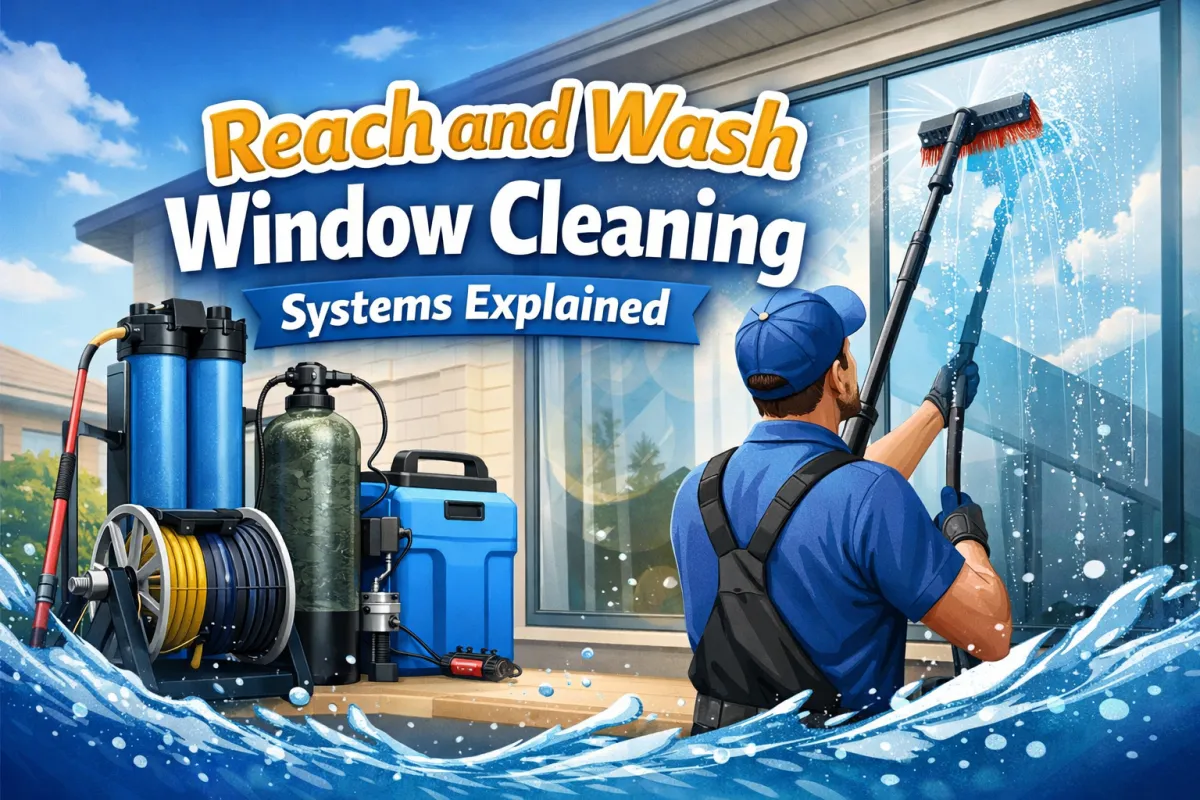
Reach and Wash Window Cleaning Systems Explained
Modern window cleaning has come a long way from ladders and squeegees. Today, water-fed pole systems – often referred to as Reach and Wash – are transforming the industry. In this article, we break down exactly how these systems work, why they’re better for safety and the environment, and how purified water leads to a spotless, streak-free finish. You'll learn the science behind de-ionised water, the benefits of ladder-free operation, and why this technology is used for everything from residential homes to high-rise glass façades. If you're looking to hire a window cleaner, understand the innovation behind the tools, or want to improve your business' curb appeal, this guide is for you.
A Window Cleaning Revolution
Once upon a time, window cleaning was risky, time-consuming, and chemically intense. Buckets of soapy water and towering ladders were standard tools of the trade. But as buildings have gotten taller and glass has become a dominant feature in modern architecture, the industry needed a safer, more effective solution.
Enter the Reach and Wash system—a window cleaning innovation that allows operators to clean windows from the ground using nothing but pure water and advanced technology.
<blockquote> “Water-fed pole systems are designed to eliminate the need for ladders, reduce the environmental impact, and deliver professional, sparkling results every time.” </blockquote>
These systems are now widely used across the UK—from residential homes and schools to commercial glass façades and stadiums. And at Pivotal Window Cleaning, they’re central to how we deliver safe, efficient, and high-quality results for customers across the country.
What Is a Reach and Wash System?
At its core, a Reach and Wash system is a water-fed pole system that uses purified water to clean windows without detergents or chemicals. The key components include:
Telescopic or extendable poles (often made from lightweight carbon fibre)
A soft filament brush head
A water purification unit
An electric pump system to drive water from a tank through the pole
This setup allows for ladder-free cleaning up to 70–90 feet high—perfect for buildings where traditional access is difficult or dangerous.
Why It’s Different
The magic of the system lies in the water. Instead of relying on harsh chemicals, it uses de-ionised water, which has been stripped of minerals and impurities through processes like reverse osmosis and ion exchange. This pure water system clings to dirt, dissolving it at a molecular level. The result? A streak-free finish that dries naturally—no need to squeegee or towel off.
“With no residue left behind, windows stay cleaner for longer.”
How the Science Works: Purified Water vs Tap Water
One of the most common questions we get is: Why not just use tap water?
Here’s the deal:
Tap water contains dissolved minerals like calcium, magnesium, and sodium.
When left to dry on a surface, these minerals leave behind white streaks and spotted residue.
Purified water is processed to remove those minerals, resulting in mineral-free water that leaves no trace.
The purification process typically includes:
Sediment filtration – to remove visible dirt and particles
Carbon filtration – to eliminate chlorine and organic matter
Reverse osmosis – to strip away microscopic minerals
De-ionisation – using ion exchange resins to polish the water to its purest state
This science-backed process results in water that actively attracts dirt and lifts it from the surface, making it perfect for chemical-free cleaning of sensitive surfaces like upvc frames, solar panels, and glass façades.
If you're a property manager or facility owner, this also means less damage over time and lower maintenance costs—something we help clients with through tailored location-specific services across the UK.
Benefits of a Reach and Wash System
There’s a reason why this method is the go-to for professionals. Here’s a breakdown of the major benefits:
1. Safety
No ladders mean no falls. Window cleaners stay safely on the ground—whether they’re cleaning a two-storey home or a multi-storey office.
2. Eco-Friendliness
This is green cleaning at its finest. The process uses zero detergents, making it ideal for buildings near gardens, water features, or eco-sensitive areas.
3. Efficiency
Using a high-reach cleaning pole system significantly cuts down time. Cleaners can move quickly from one window to the next without relocating ladders or equipment.
4. Cost-Effective
Because the process is faster and safer, it often comes with lower operational costs, which can translate into affordable pricing for customers. You can request a quote directly to see how this applies to your property.
Who Uses These Systems?
Reach and Wash systems aren’t just for skyscrapers. Here’s where they shine:
Residential window cleaning
Commercial buildings and offices
Industrial window cleaning in warehouses and factories
Post-construction window cleaning where dust and residue are common
High-rise cleaning equipment alternatives
Sustainable cleaning solutions for eco-certified buildings
From local homes to large facilities, our team is equipped to handle it all. If you’re a cleaning professional looking to learn how to attract clients in this space, our window cleaning lead generation resources might be just what you need.
How Does a Reach and Wash Clean Actually Work?
From the outside, Reach and Wash systems look deceptively simple: a person with a pole, brushing and rinsing windows. But under the surface, there's a sophisticated window cleaning technology at play.
Here’s how a standard job unfolds:
Step-by-Step Breakdown:
Setup
The van-mounted pure water system is activated. Water flows through filters (including reverse osmosis and de-ionisation) into a holding tank.Deployment
An extendable pole—sometimes reaching up to 70 feet—is connected to the system via hose. The operator walks to the site, keeping feet firmly on the ground.Brush & Rinse
The soft filament brush gently agitates dirt and debris on the glass surface. Simultaneously, a steady stream of purified water flushes away contaminants.Residue-Free Drying
The glass is left wet, but since the water is mineral-free, it dries naturally without leaving spots or streaks. No need for drying or buffing.Pack Down & Polish (Optional)
For sensitive jobs (like post-construction window cleaning), final touches might be applied with microfiber pads or additional equipment—but often, the job is done in a single pass.
<blockquote> “Because of the absence of chemicals or detergents, it’s an ideal system for sensitive environments—like hospitals, schools, and heritage properties.” </blockquote>
System Longevity & Maintenance
A well-maintained Reach and Wash setup is a reliable, low-maintenance solution. However, performance depends on keeping certain elements in top condition:
Brush heads should be cleaned or replaced regularly to maintain effectiveness.
Carbon fibre poles need inspection for cracks or wear, especially at joints.
Filter systems (especially DI and RO filters) require replacement based on water hardness in your area.
Many providers schedule monthly maintenance and annual servicing of their systems to ensure maximum uptime and water quality. Regular upkeep also helps avoid costly replacements of parts like the electric pump system or ion exchange vessels.
When Is Reach and Wash Not Ideal?
While this system works beautifully in most scenarios, there are instances where it may not be the best fit:
Internal windows – Reach and Wash uses too much water to be used inside buildings.
Extreme buildup – On surfaces with years of neglect, a traditional deep clean or soft washing may be required first.
Delicate architectural details – Some fragile cornices or carvings may need alternative techniques to avoid damage.
That said, these are the exceptions rather than the rule. For most UK properties—residential or commercial—the system excels.
If you're unsure whether it's suitable for your building, our expert team is happy to advise.
Why It’s Becoming the Industry Standard
From a professional’s perspective, the rise of Reach and Wash isn’t just a passing trend—it’s a response to evolving needs in:
Building safety regulations
Sustainable cleaning goals
Demand for high-volume service without cutting quality
This has spurred widespread adoption among:
Property management firms
Hospitality and healthcare sectors
School and council buildings
High-rise residential developments
More importantly, it aligns with long-term objectives of eco-friendly window cleaning, cost efficiency, and operator safety.
“It’s not just about clean windows. It’s about how we clean them—and why that matters.”
Choosing the Right Provider
Not all window cleaners using Reach and Wash systems are equal. Look for:
Trained operators – especially those experienced in complex height access cleaning
Modern equipment – such as carbon fibre poles and multi-stage filtration
Flexibility – Can they adapt to commercial, residential, and specialist cleans?
At Pivotal Window Cleaning, we’re not just another service provider—we’re a nationwide window cleaning lead generation hub that connects clients with top-tier cleaners across the UK.
Whether you manage a portfolio of commercial properties or need reliable residential window cleaning, we can match you with vetted professionals using the latest Reach and Wash systems.
Advanced Applications and Specialist Use Cases
While water-fed pole systems have transformed everyday residential and commercial window cleaning, their full potential shines in more demanding environments.
Here are some standout examples of where Reach and Wash systems truly excel:
1. Glass Façade Cleaning
Modern architecture favours clean, expansive glass frontages that are visually striking—but also prone to grime. Using high-reach telescopic poles and pure water, façade cleaning becomes safer and more effective, even on multi-storey buildings.
“Traditional window cleaning simply can’t match the reach or consistency offered by these systems—especially when it comes to glass-heavy commercial sites.”
2. Solar Panel Cleaning
Solar panels are delicate, expensive, and prone to performance loss when dirty. Reach and Wash systems use chemical-free, purified water to clean panels without scratching or damaging them, making it a preferred choice for solar farms and residential installations alike.
3. Upvc Frame Cleaning
Frames often attract sticky dirt and algae over time. A gentle stream of de-ionised water combined with a soft filament brush can safely lift grime without the need for harsh scrubbing or damaging agents.
4. Cladding and Signage
External building surfaces like cladding and signage can also benefit from the same technology. The ability to access these features safely from the ground makes it a reliable solution for industrial window cleaning and facade maintenance.
If you’re seeking flexible, scalable services for multi-property portfolios, take a look at our nationwide locations we serve to find trusted professionals in your area.
The Smart Choice for Clean, Modern Buildings
Whether you're managing a business complex, looking for a residential window cleaning solution, or exploring safer, more sustainable options, Reach and Wash systems offer unmatched benefits:
No ladders, no chemicals
Environmentally conscious
Long-lasting, streak-free finishes
Capable of handling everything from soft washing to hard water stain removal
“In today’s fast-moving, image-driven world, first impressions count—and clean windows make all the difference.”
For industry professionals looking to grow their business using this advanced technology, window cleaning lead generation is available through our platform to connect you with high-quality leads across the UK.
Ready for Crystal Clear Results?
Whether you need to restore the shine to your shopfront, maintain a portfolio of properties, or simply want your home to look its best, Reach and Wash window cleaning is the future-facing solution.
We make it easy. Request a quote today or explore our homepage to discover why more customers across the UK trust Pivotal Window Cleaning.
Frequently Asked Questions: Reach and Wash Window Cleaning
1. How often should windows be cleaned with a Reach and Wash system?
For most properties, a 4 to 8-week cleaning cycle maintains optimal clarity and cleanliness. High-traffic commercial buildings or coastal homes may require more frequent cleaning due to exposure to pollutants or salt.
2. Can Reach and Wash systems be used during winter months?
Yes, Reach and Wash systems work year-round. Many setups include heating elements or are designed to operate efficiently in colder temperatures. However, extreme freezing conditions may limit use due to water line freezing or safety concerns on icy ground.
3. Is Reach and Wash suitable for heritage or listed buildings?
Absolutely. The non-abrasive brushes and chemical-free water make it ideal for sensitive materials like antique glass, stone mullions, and wooden frames. It ensures preservation without compromising on cleanliness.
4. How far can a water-fed pole reach?
Most systems can clean effectively up to 70 feet (approximately 6 storeys). Advanced carbon fibre poles and booster systems can extend reach up to 89 feet in some setups—perfect for high-rise buildings or atriums.
5. What surfaces besides windows can be cleaned using the system?
In addition to windows, Reach and Wash can clean:
Solar panels
Cladding
Signage
Skylights
Conservatory roofs
UPVC frames
Its versatile cleaning power makes it popular across multiple industries and property types.
6. Does Reach and Wash use a lot of water?
Surprisingly, no. Because it’s a closed, efficient system, the amount of water used per job is often less than traditional methods—especially when combined with good technique and high-quality filtration.
7. Can the water damage paintwork or sealants?
No. The water is ultra-pure and free from detergents or harsh minerals, meaning it won’t erode paint, silicone, or mortar. It's gentle on surfaces, making it ideal for new builds or detailed finishes.
8. Is there a risk of water ingress or leaking into the property?
Very low risk. Since cleaning is done at low to moderate water pressure, and technicians avoid forcing water into vents or seals, properly trained professionals won’t cause leaks. If your windows are poorly sealed, it’s worth discussing ahead of time.
9. Do I need to be home during the clean?
Not necessarily. Most exterior window cleaning using Reach and Wash systems can be done without needing access to the property—a convenient option for busy homeowners or property managers.
10. What qualifications or training should a Reach and Wash operator have?
Look for window cleaners trained by recognised bodies like the British Window Cleaning Academy (BWCA) or those with health and safety accreditation. Experience with the system and commercial insurance are also important for peace of mind.


